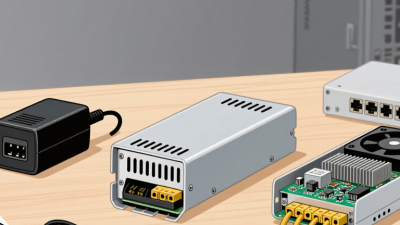
What Are the 2026 Top Switching Power Supply Manufacturers?
In 2026, selecting a Switching Power Supply manufacturer means looking beyond a familiar brand name. Engineers compare efficiency, output stability, thermal performance, and protection features against the demands of the final device. A compact adapter for office equipment faces different stresses from a power unit serving factory controls. Small details matter. Connector options, ventilation, and access to technical documentation can shape installation and maintenance long after the initial purchase.
This overview considers manufacturers through practical criteria: product range, published specifications, quality systems, global support, and suitability for common applications. It does not treat “top” as a universal ranking. A company with broad catalog coverage may not be the best fit for a space-constrained medical instrument or a noisy industrial cabinet. Buyers should verify current datasheets, approvals, lead times, and customization limits directly with each supplier. Those details can change by model and market.
Real-world evaluation also involves trade-offs. Higher efficiency may reduce heat, yet price and availability still matter. A polished product page is useful, but it cannot replace sample testing under actual load and temperature conditions. I would be cautious about any comparison that claims one clear winner for every use case. The evidence is rarely that tidy. The manufacturers discussed here offer a starting point for informed research, not a substitute for application-specific engineering review.
How Switching Power Supplies Work and Where They Are Used
A switching power supply converts incoming electricity into a stable output voltage.
It rapidly turns current on and off, then uses inductors or transformers, rectifiers, and filters to shape the energy. Feedback circuits adjust switching as the load changes. Efficiency is not automatic. Heat, electrical noise, and poor component choices can still reduce performance. A compact unit inside a metal enclosure may run reliably, yet need airflow to avoid overheating.
These converters serve computers, LED lighting, telecom equipment, factory controls, and many charging systems. The IEA’s Electricity 2024 report estimates that data centres, AI, and cryptocurrency together used about 460 TWh in 2022. Its 2026 scenarios range from 620 to 1,050 TWh. This is sector-wide demand, not a forecast for power supplies alone. Still, it shows why efficient conversion matters in equipment rooms packed with servers. On a factory floor, stable output helps sensors and controllers handle changing loads. Engineers must also consider temperature, electrical noise, and expected operating hours. Voltage labels alone tell little. I have seen apparently suitable supplies fail when ventilation and load peaks were overlooked.
Criteria for Evaluating Manufacturers in 2026
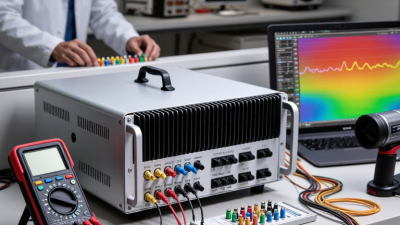
In 2026, compare power supply manufacturers by measured performance, not headline wattage. Ask for efficiency curves at 20%, 50%, and 100% load, plus ripple, hold-up time, and thermal derating data. A supply that passes at room temperature may behave differently inside a hot, crowded cabinet. Test it under heat. Check whether published results come from accredited laboratories and match the exact model and configuration being purchased.
Reliability deserves equal weight. The Uptime Institute’s 2024 Annual Outage Analysis reported that 54% of respondents’ most recent significant outages cost more than $100,000. That figure is not specific to power supplies, but it shows why protection design, traceable production, and documented failure rates matter. Request batch-level test records, warranty terms, and a clear process for investigating field failures. A tidy datasheet can still mislead.
Efficiency also matters as equipment loads rise. The International Energy Agency’s Electricity 2024 report estimated data-center electricity use could reach 620–1,050 TWh by 2026, up from about 460 TWh in 2022. Compare efficiency across realistic operating loads, not only at peak output. Also assess component availability, design-change notification, and engineering support. These details are easy to overlook. Some buyers may overvalue a long feature list; consistent test evidence is less glamorous, but more useful.
Leading Switching Power Supply Manufacturers in 2026
In 2026, leading switching power supply manufacturers stand out through dependable engineering, clear documentation, and support beyond the initial sale. A useful comparison starts with the application: output voltage, current, operating temperature, and available enclosure space. Small details matter. A supply mounted beside a warm motor may need more thermal margin than a bench prototype. Look for efficiency data across the load range, plus test information on ripple, startup behavior, and overload protection. Certifications should match the intended market and product category; buyers should verify current documents rather than rely on a catalog claim.
Manufacturing consistency matters too. Ask how suppliers control component changes, inspect production batches, and handle traceability. Request a sample and review its datasheet, derating curve, and installation guidance before committing to volume. A responsive engineering team can help assess unusual loads or noisy environments. No scorecard is perfect. Price, availability, and technical fit rarely align neatly, and a polished datasheet cannot replace testing in the actual system. It is easy to overlook long-term serviceability. Check expected product life, repair options, and notice periods for design changes, especially when the power supply will be built into equipment for years.
What Are the 2026 Top Switching Power Supply Manufacturers? - Leading Switching Power Supply Manufacturers in 2026
Brand-neutral efficiency benchmarks for comparing switching power supplies
Efficiency thresholds (%) at 20%, 50%, and 100% load, based on 80 PLUS requirements for 115-volt internal non-redundant power supplies. Certification benchmarks help compare efficiency, but do not rank manufacturers or measure overall product quality.
How Manufacturers Differ by Product Range and Industry
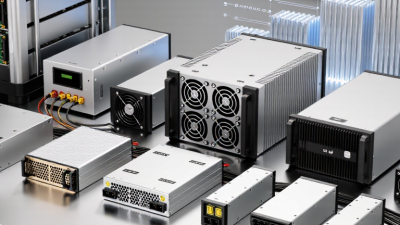
In 2026, power supply manufacturers differ less by a single “best” product than by the problems their ranges are built to solve. Some offer compact AC/DC units for embedded equipment, while others cover DIN-rail supplies, DC/DC converters, and modular systems. A broad catalogue can simplify sourcing. It does not automatically mean every model suits a demanding application.
Industry focus shapes the details. Factory controls may need a rugged enclosure, stable output, and dependable operation across temperature changes. Medical equipment calls for carefully documented safety and leakage-current specifications. Telecom systems often prioritize redundancy and high power density, while LED installations may need dimming compatibility and weather-resistant housings. Check the actual datasheet, not just the category label. Small print matters.
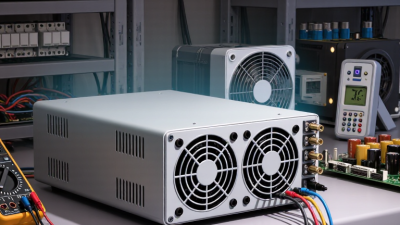
Engineering support and product continuity also separate suppliers. Ask how a unit behaves under overload, how much output derating is needed in a hot cabinet, and whether replacement models are planned. These are practical questions. Bench tests can reveal heat buildup that a catalogue photo cannot. Still, published figures do not capture every installation; wiring, airflow, and load patterns change results. I’d leave room for that uncertainty when comparing manufacturers, especially when a product range looks impressive but offers little application guidance.
Factors to Consider When Choosing a Manufacturer
When comparing switching power supply manufacturers, begin with the actual load profile, not the headline efficiency. Grand View Research estimated the global power supply market at about US$31.4 billion in 2023 and forecast a 5.8% compound annual growth rate through 2030. This broad market figure is not specific to switching supplies, but it signals a crowded, evolving supply base. Ask vendors for efficiency curves across light, typical, and peak loads, plus derating data at your real enclosure temperature. Check the curve. A unit rated for 40°C may lose output capacity in a sealed cabinet near a hot motor. Also review ripple, transient response, hold-up time, and protection behavior against the application’s requirements.
Reliability evidence matters more than polished catalog claims. Request burn-in conditions, failure-rate assumptions, traceable test records, and the method used to calculate mean time between failures. Confirm that safety certification covers the exact model and intended use; IEC 62368-1 may apply to information and communication equipment, but it is not universal. Check component change control, production-site consistency, warranty terms, and notice periods for end-of-life parts. That sounds straightforward. It is not. Compare samples under your own load and temperature conditions, and document the results. A 2024 report from the International Energy Agency on electricity demand highlights rising power needs from digital infrastructure; for buyers, that makes thermal performance and dependable delivery worth checking alongside price. No single score settles it.

 Products
 News
 Whatsapp
 Skype
 Wechat