Products
News
Whatsapp
Skype
Wechat
Choosing a dependable Switching Power Supply brand is rarely as simple as comparing wattage, price, or a polished website. Global buyers face different grid standards, certification requirements, climate conditions, and service expectations. A supply tested in a cool laboratory may behave differently inside a dusty factory cabinet in Southeast Asia or a cold warehouse in Northern Europe.
Robert W. Erickson, a respected power electronics researcher, described the field clearly: “Power electronics is the application of solid-state electronics to the control and conversion of electrical energy.” That principle guides this review. The strongest manufacturers usually combine efficient circuit design, stable voltage regulation, controlled ripple, thermal protection, and traceable quality testing. Their datasheets should show more than attractive efficiency numbers. Look for load-test conditions, operating temperatures, derating curves, MTBF assumptions, and real warranty procedures.
This list examines ten Switching Power Supply brands for international purchasing decisions. It considers industrial experience, product consistency, safety documentation, distributor reach, customization, and after-sales support. Independent test results matter, but they do not tell the whole story. A buyer may still face delayed replacements, unclear technical communication, or difficult regional returns. That weakness deserves attention.
Some choices will be imperfect.
No brand fits every project. A compact LED installation may value low cost and small size, while medical, automation, and telecom systems may prioritize isolation, redundancy, and long service life. Weigh the evidence against your actual load, enclosure, installation site, and maintenance capability. A careful shortlist can prevent expensive failures hidden behind a low purchase price.

A switching power supply converts electrical energy by rapidly turning a transistor on and off. A transformer, inductor, diode, and capacitor then reshape those pulses into stable voltage. Feedback continuously compares the output with a reference signal. If a laptop draws more current, the controller adjusts the switching duty cycle within microseconds.
The process is efficient, but not effortless. High-frequency switching reduces transformer size and heat, yet it creates electromagnetic noise. Designers add filters, shielding, and careful circuit layout. A loose connection or undersized capacitor can cause ripple, audible noise, or early failure. The textbook diagram looks clean; real boards are not.
MarketsandMarkets estimated the global power supply market at about USD 32.3 billion in 2023, with projected growth to USD 41.6 billion by 2028. This demand reflects electronics, industrial controls, networking equipment, and electric vehicles. The IEA’s Electricity 2024 report also estimated data centers used around 460 TWh globally in 2022, with consumption potentially exceeding 1,000 TWh by 2026. Every percentage point of conversion efficiency matters in such facilities. Engineers commonly check efficiency across light, typical, and maximum loads, not only the headline rating. That practice is sometimes skipped, and it should not be. A supply that performs well on a test bench may behave differently inside a hot cabinet.
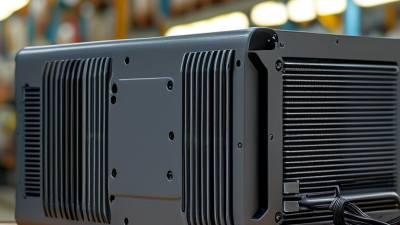
Choosing among the 10 best switching power supply brands requires more than checking price or wattage. Global buyers should compare efficiency, protection design, certification, and local service. MarketsandMarkets’ 2024 power supply report projects steady market growth through 2028, driven by automation, telecommunications, and data centers. This growth increases supplier choices, but also increases quality differences.
Efficiency deserves close attention. The IEA’s Electricity 2024 report indicates that data center electricity demand could more than double by 2026. A supply with strong conversion efficiency reduces heat, cooling costs, and long-term energy waste. Check documented efficiency curves, not only peak ratings. Verify input ranges, power-factor correction, ripple performance, overload protection, and derating above 40°C. IEC 62368-1 and relevant EMC requirements also matter in international installations. One warning remains: MTBF figures can look impressive, yet they may rely on ideal temperatures and controlled testing. Treat them as indicators, not guarantees.
Tips: Request complete datasheets, test reports, warranty terms, and regional certificates before ordering. Compare total ownership cost, including freight, replacement time, and technical support. A low unit price may become expensive after repeated failures. Check whether spare units are available locally. Also, question vague claims. Reliable documentation is often more valuable than polished marketing language. Perfect comparisons are rare, and procurement teams should record the assumptions behind every decision.
| Evaluation Criterion | Recommended Benchmark for Global Buyers | Why It Matters | How to Verify | Suggested Weight |
|---|---|---|---|---|
| Input Voltage Compatibility | Universal input, typically 100–240 VAC, 50/60 Hz | Supports deployment across major regional power systems without requiring different models. | Review the official datasheet and test performance at minimum and maximum rated input voltage. | 12% |
| Output Regulation | Voltage regulation commonly within ±1% for quality industrial units | Stable output protects connected equipment and improves system reliability. | Check load-regulation and line-regulation specifications; confirm with laboratory testing. | 12% |
| Energy Efficiency | At least 85–90% for many modern products; higher values are preferred for continuous operation | Higher efficiency reduces energy consumption, heat generation, and cooling requirements. | Compare efficiency curves at 25%, 50%, 75%, and 100% load rather than relying only on the peak value. | 14% |
| Power Factor and Harmonics | Power factor correction preferred; active PFC commonly targets PF of 0.90 or above | Improves utilization of the AC supply and helps reduce electrical distortion. | Request power-factor and total-harmonic-distortion test data at representative loads. | 8% |
| Safety Protection Functions | Short-circuit, over-current, over-voltage, over-temperature, and over-power protection | Protection features reduce the risk of equipment damage and unsafe operating conditions. | Confirm protection thresholds, auto-recovery behavior, and fault-test results in the technical manual. | 14% |
| Regulatory Compliance | Applicable approvals may include CE, UKCA, UL or equivalent national requirements, depending on destination | Compliance supports legal market access and simplifies customer acceptance. | Verify certificates, declaration documents, and whether they apply to the exact model and revision. | 14% |
| EMC Performance | Designed and tested against relevant conducted- and radiated-emission limits | Good electromagnetic compatibility helps prevent interference with nearby equipment. | Request EMC test reports and review installation requirements for grounding and cable routing. | 8% |
| Operating Temperature and Derating | Industrial designs commonly support approximately −20°C to +70°C, with output derating at higher temperatures | Thermal capability affects reliability in outdoor, factory, and enclosed installations. | Examine the derating curve, airflow requirements, maximum case temperature, and MTBF conditions. | 10% |
| Product Life and Warranty | Warranty terms of 2–5 years are commonly considered competitive; longer coverage is preferable | Warranty length and component life provide useful indicators of supplier confidence and lifecycle support. | Review warranty exclusions, service procedure, replacement policy, and rated operating conditions. | 10% |
| Global Supply and Technical Support | Documented lead times, multilingual documentation, regional distribution, and accessible engineering support | Reliable supply and responsive support reduce project delays and post-installation risk. | Evaluate inventory commitments, minimum order quantities, response-time targets, spare-part access, and RMA procedures. | 8% |
| Total Evaluation Weight | 100% | |||
Note: Benchmarks vary by power rating, application, installation environment, and destination market. Buyers should validate the exact model against current technical documentation and applicable local regulations.
Ten Leading Switching Power Supply Brands and Their Strengths
The global switching power supply market is becoming more demanding, not simply larger. MarketsandMarkets reported that the global power supply market could reach about USD 40 billion by 2028, supported by data centers, industrial automation, telecommunications, and electric mobility. The ten leading suppliers usually compete through different strengths. Some focus on compact AC-DC modules for control cabinets. Others provide high-efficiency DC-DC converters, programmable laboratory units, or rugged supplies for harsh environments. In field evaluations, thermal performance often matters more than a polished specification sheet. A supply may claim 94% efficiency, yet perform differently inside a hot, crowded enclosure.
Reliability depends on measurable details. The 80 PLUS program shows how efficiency targets influence energy losses in server and industrial equipment. Meanwhile, IEC 62368-1 and IEC 61010-1 remain important references for safety design and equipment evaluation. Strong suppliers usually offer documented derating curves, conducted-emission test results, overload protection, and long-term availability. Good documentation saves engineering time. It also exposes weaknesses. A product with excellent ripple figures may still lack global certifications or replacement support. Rankings are not perfectly clean, because application needs vary sharply. A factory engineer may value a metal chassis and wide temperature range, while an automation designer prioritizes DIN-rail mounting and remote monitoring. Buyers should compare verified test data, warranty terms, regional stock, and service response before trusting market reputation.
Choosing a switching power supply depends on more than price or wattage. Industrial automation needs stable output, strong surge tolerance, and efficient cooling. Medical equipment demands low noise, dependable isolation, and documented quality control. Retail displays may prioritize compact size and easy replacement.
Power requirements should be calculated from real operating conditions. Check startup current, peak loads, voltage variation, and available cabinet space. Leave practical headroom instead of running a supply at its limit. A 240-watt load may need a 350-watt unit in a hot enclosure. I once selected a model by rated output alone, and the temperature rise exposed that mistake. Specifications can look convincing. Field conditions are less polite.
Regional support also shapes reliability. Look for local inventory, clear warranty procedures, multilingual manuals, and responsive technical engineers. Confirm input ranges, connector standards, safety certifications, and service coverage for each destination. A supply that performs well in a laboratory may struggle in a dusty factory or a humid coastal warehouse. Independent test reports and traceable production records add confidence, but they do not replace installation checks.
Tips:
Measure actual load behavior before choosing a model. Test the supply at low and high temperatures. Compare efficiency at typical, not only maximum, load. Keep one compatible spare for critical equipment. Recheck your decision after deployment, because the original assumptions may be incomplete.
A reliable switching power supply should pass more than a clean product test. Request datasheets, circuit diagrams, production records, and recent safety reports. Check efficiency, thermal performance, ripple, insulation, and overload protection under realistic loads. A sample running for two hours may look stable, yet factory consistency can remain uncertain.
Compliance documents require careful review. Confirm that certificates match the exact model, input range, and manufacturing site. Check the testing laboratory and issue date. Requirements differ across markets, so a document accepted in one country may not satisfy another authority. Ask for materials declarations and records showing restricted substances are controlled. Do not rely only on a logo printed on a carton.
After-sales support often reveals the supplier’s real capability. Ask about response times, failure analysis, replacement procedures, and available spare units. A clear warranty should define coverage, exclusions, shipping responsibility, and repair limits. Test the service before placing a large order: send technical questions and measure the reply. I once focused too heavily on price and ignored response delays. That decision created avoidable production pressure. It also showed me that quality verification is incomplete without practical communication. Keep approval samples, inspection photos, serial numbers, and test results in one shared file. Small details matter.