Leave Your Message

What Is the Best Switching Power Supply in 2026?

A Switching Power Supply can look impressive on a product page and still disappoint under a real load. The best choice in 2026 depends on what it must power, where it will operate, and how much electrical noise the application can tolerate. A compact adapter for a network router has different demands from a supply feeding industrial controls or a sensitive audio device. There is no universal winner. That matters.

This guide compares the details that affect everyday performance: rated output, voltage regulation, efficiency, ripple and noise, cooling, and built-in protections. It also considers practical signs of quality, such as clear datasheets, accessible support, and specifications that match independent test results. A listed wattage alone is not enough. Check whether the supply can deliver that output continuously, especially in a warm enclosure or at low input voltage. Small details count.

Comparisons can be imperfect. Test conditions vary, and a result measured on a bench may not predict performance in your installation. We will point out those limits rather than treat every published number as directly comparable. The goal is a shortlist based on evidence and use case, not hype. Before buying, confirm connector type, input range, mounting needs, and required safety approvals for your region. Then weigh price against reliability and serviceability. The “best” supply is the one that fits the load with comfortable margin—and keeps doing so after hours of operation.
What Is the Best Switching Power Supply in 2026?

Understanding Switching Power Supplies and Their Main Functions

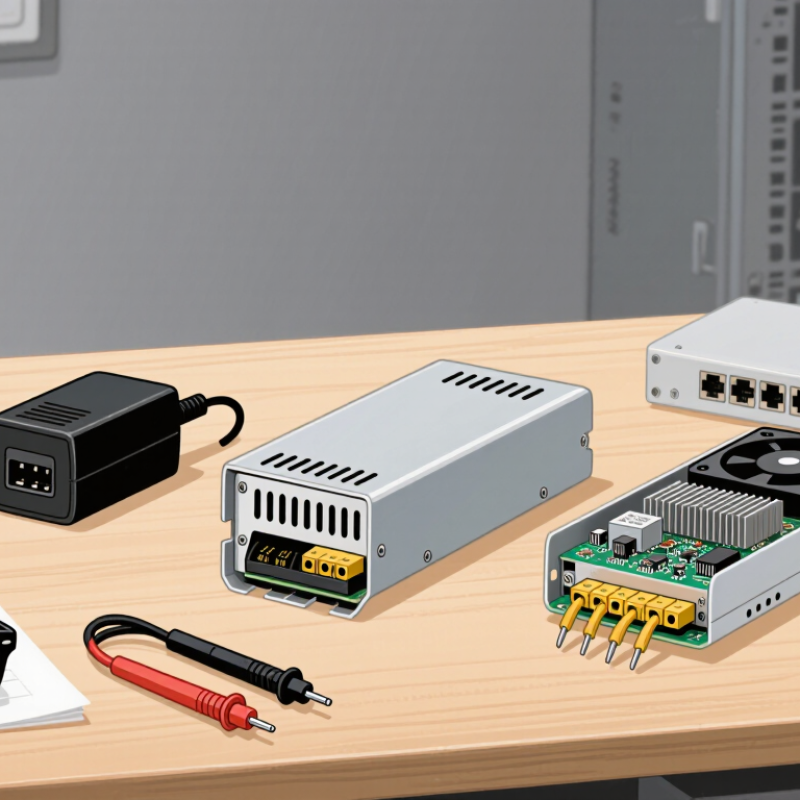
A switching power supply converts incoming electrical power into a form a device can use. Unlike a simple linear supply, it rapidly switches current on and off, then uses magnetic components and filtering to shape the output. Inside, a transistor may switch thousands of times per second. A transformer or inductor transfers energy, while capacitors smooth the resulting voltage. Small details matter.

A control circuit monitors the output and adjusts switching when the load changes. If a motor starts or a screen brightens, the supply can respond to the extra demand and keep voltage within its designed range. Many units also include protection against excessive current, heat, or short circuits. Efficiency is a key function: less wasted energy usually means less heat, though real performance depends on the design and operating conditions. A switching supply is not automatically better; poor layout or cooling can undermine good components. When evaluating one, check its output voltage, current capacity, ripple, efficiency, and temperature limits against the actual device. A label alone tells only part of the story.

How Switching Power Supplies Convert and Regulate Electrical Power

What Is the Best Switching Power Supply in 2026?
How Switching Power Supplies Convert and Regulate Electrical Power

A switching power supply turns incoming AC into usable DC through controlled, rapid switching. A rectifier first converts AC into unsteady DC. A transistor then switches that current on and off at high frequency. A transformer adjusts the voltage when isolation or voltage conversion is needed. Finally, output components smooth the signal. A feedback circuit checks the output and adjusts switching to keep voltage steady as the load changes. That is the core. Real performance also depends on heat, ripple, and response to sudden load changes.

Efficiency matters because losses become heat. The International Energy Agency’s Electricity 2024 report estimates that data centres, AI, and cryptocurrency used about 460 terawatt-hours worldwide in 2022. That figure is not specific to power supplies, but it shows why efficient power conversion deserves attention. For an individual unit, compare efficiency across its expected load range, not just at one peak rating. Check output voltage, current capacity, ripple, protection features, and operating temperature. The tidy block diagram is useful, but it hides real design trade-offs.

Tips: Match the supply’s voltage to the device, and leave current headroom for brief load spikes. Check the datasheet for efficiency and ripple measurements. Heat still matters. A poorly ventilated enclosure can shorten component life, even when the unit meets its rated output.

Common Types of Switching Power Supplies in 2026

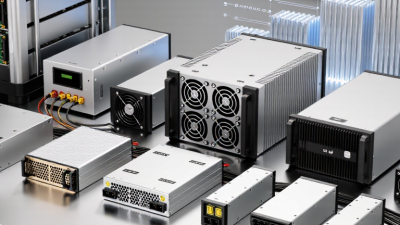
Switching power supplies are not one-size-fits-all; their circuit design and packaging shape where they work best. AC-DC units convert mains electricity into regulated DC for control panels, chargers, and embedded equipment. DC-DC converters change one DC voltage to another, making them useful in vehicles, battery systems, and circuit boards. Some designs are isolated, creating an electrical barrier between input and output; others are non-isolated and often more compact. That distinction matters.

Among common circuit types, buck converters step voltage down, while boost converters raise it. Flyback designs suit modest power levels and can provide multiple outputs, though ripple and transformer design need attention. Forward converters can serve higher loads, but their control and magnetic components add complexity. Packaging matters too: open-frame supplies depend on the equipment enclosure, while enclosed models have protective cases. DIN-rail versions mount neatly in electrical cabinets.

Selection should account for input range, output voltage, current, ripple tolerance, cooling, and available space. A supply that meets its rated output may still struggle in a hot, tightly packed enclosure.

Thermals matter.

Check the datasheet’s derating curve and assess temperature under realistic load; these categories can overlap more than simple charts suggest.

Key Criteria for Choosing the Best Switching Power Supply

Choosing the best switching power supply starts with its real load, not the largest wattage on the box. Estimate the peak demand of the connected equipment, then leave sensible headroom for startup surges and future changes. Efficiency matters, too. The 80 PLUS program’s published test criteria show that a Gold-rated, non-redundant supply tested at 115 volts must reach 87%, 90%, and 87% efficiency at 20%, 50%, and 100% load, respectively. Treat those figures as test benchmarks, not a promise of identical performance in every installation.

Check the output voltage tolerance, ripple specification, protection features, and operating temperature range in the technical datasheet. A unit that runs near its thermal limit may become noisy or shorten component life. Heat matters. For a practical comparison, measure the supply under a representative load and note its temperature after it has stabilized. Also check whether its input range matches the local mains supply and whether its connectors fit the equipment without improvised adapters. A tidy label can still hide an awkward fit.

Published efficiency ratings help narrow the options, but they do not measure everything. Review the manufacturer’s test conditions and look for independent test results where available. A quieter fan may be useful in a small enclosure, yet fan behavior can change sharply with temperature. I would not choose on efficiency alone; I have found that installation space and cooling are easy to underestimate.

What Is the Best Switching Power Supply in 2026? — Key Criteria for Choosing the Best Switching Power Supply

Efficiency is one useful comparison point. This chart shows 80 PLUS minimum efficiency levels for internal, non-redundant desktop power supplies tested at 115 V.

Values are certification thresholds, not a guarantee of real-world performance. Choose a supply with suitable wattage and connectors, and also check its safety protections, operating temperature range, noise, and independent test results.

Comparing Top Switching Power Supplies for Different Applications

The best switching power supply in 2026 depends less on a headline efficiency figure than on the load it must serve. For a small control cabinet, a regulated DIN-rail unit with clear overload behavior can be more useful than a compact design with extra features. Check its rated output, input range, temperature limits, and mounting clearance. A supply rated for a warm cabinet may still need derating when airflow is poor.

For LED lighting, low ripple and stable current matter because visible flicker can undermine an otherwise sound installation. Sensitive measurement equipment may need cleaner output and careful attention to electrical noise. In a battery-powered device, efficiency at the usual operating load matters more than a peak figure reached under ideal conditions. Heat changes the answer. Compare protection features, isolation requirements, and documented safety testing for the intended application. One trade-off is easy to miss: a larger unit may run cooler, but it can be awkward in a tight enclosure. I would not choose from specifications alone; verify connector fit and startup behavior in the actual system. Not always. A technically suitable supply can still disappoint when wiring, ventilation, or the real load differs from the test setup.

What Is the Best Switching Power Supply in 2026? — Comparing Top Switching Power Supplies for Different Applications

Application Best-Fit Supply Type Typical Output Range Typical Power Range Typical Efficiency Key Selection Priorities Best Fit When…
Industrial control panels DIN-rail AC-to-DC switching supply Commonly 12 V, 24 V, or 48 V DC About 30–960 W, depending on the unit Approximately 88–96% for many models Operating temperature, overload protection, vibration tolerance, mounting format, and required approvals You need a compact supply that mounts on a control-panel DIN rail and powers automation equipment.
LED lighting Constant-current LED driver; constant-voltage type where the lighting system requires it Constant-current outputs vary by LED string; constant-voltage systems commonly use 12 V or 24 V DC From a few watts to several hundred watts Approximately 85–94% for many designs Correct current or voltage mode, dimming compatibility, protection rating, power factor, and thermal conditions You need to match the driver to the LED load and installation environment rather than choose by wattage alone.
Servers and data-center equipment Hot-swappable server power supply, often with power-factor correction Commonly 12 V or 48 V DC output architectures Roughly 1–3 kW per supply in many server platforms Approximately 90–97%, depending on load and design Redundancy, load-sharing support, airflow direction, connector compatibility, and efficiency across the expected load range You need high power density, serviceability, and continuity through a redundant power arrangement.
Desktop computers and workstations ATX-format switching power supply Multiple regulated DC rails, including 12 V, 5 V, and 3.3 V Commonly about 450–1,600 W Approximately 80–94%, depending on design and operating load Continuous output rating, connector set, transient handling, cooling, and compatibility with the computer chassis You need a standardized supply for a desktop PC and can verify that its connectors and capacity suit the components.
Medical equipment Medical-grade AC-to-DC switching supply Commonly 5–48 V DC, with other outputs available About 15–300 W for many embedded applications Approximately 85–94% for many designs Applicable medical-safety approvals, isolation, leakage-current limits, EMC performance, and the end product’s risk requirements You need a supply designed and evaluated for a medical application; confirm the exact requirements for the finished equipment.
Consumer electronics and embedded devices Enclosed or external AC-to-DC adapter Commonly 5–24 V DC About 5–100 W for many devices Approximately 85–93% for many designs Output regulation, connector and polarity, standby power, thermal performance, and applicable regional safety requirements You need a straightforward, compact supply for a low- or medium-power device.
Battery-powered equipment and charging systems Switch-mode charger or programmable AC-to-DC supply with a charging stage Selected to match the battery chemistry and series-cell configuration From a few watts to several kilowatts Often about 85–96%, depending on power level and charging stage Correct charge profile, current and voltage limits, temperature sensing, protection, and battery-management-system compatibility You need controlled charging; a general-purpose power supply alone may not provide the required battery protections.

Note: Specifications shown are indicative ranges for common switching power-supply classes, not guarantees for every unit. Actual efficiency, output options, power rating, safety approvals, and environmental limits vary by model and operating conditions. Select a supply using the equipment’s requirements and the applicable standards.