What is Supply Power and How Does it Impact Energy Markets?
Supply Power is a critical aspect of energy markets. It refers to the ability to deliver electricity based on demand. Understanding Supply Power helps us grasp how energy prices fluctuate.
Energy markets are influenced by various factors. These include production levels, demand changes, and system reliability. A rise in demand can strain Supply Power. This often leads to higher prices for consumers. Conversely, when demand decreases, excess supply may lower prices.
Analyzing Supply Power is complex. It is essential for grid stability and economic efficiency. However, the variability of renewable energy sources poses challenges. Transitioning to sustainable solutions requires balancing Supply Power. These discussions can lead to better strategies but also highlight uncertainties. A deeper understanding will pave the way for improvement in energy systems.
What Is Supply Power in the Context of Energy Markets?
Supply power, in the context of energy markets, refers to the capability of energy producers to meet demand. This concept plays a
crucial role in shaping energy prices. The balance between supply and
demand determines market stability. When supply exceeds demand, prices typically drop. Conversely, when demand outstrips supply,
prices can soar.
In energy markets, factors like weather, regulations, and technology
influence supply power. For instance, a sudden heatwave can increase electricity demand, thereby tightening supply. As a result,
prices can rise sharply, impacting consumers and businesses alike. Understanding these dynamics helps stakeholders make informed
decisions.
**Tips:** To navigate these fluctuations,
stay updated on weather forecasts and energy policies. Compare energy providers regularly for competitive rates. Diversifying your
energy sources can also provide a buffer against market volatility. Always assess your energy consumption habits—small adjustments
can lead to significant savings.
Key Factors Influencing Supply Power Levels in Energy Supply
Supply power plays a crucial role in energy markets. It refers to the capacity of energy producers to deliver electricity and other energy forms. Several key factors influence supply power levels, shaping market dynamics significantly.
Weather variability impacts energy production. For instance, renewable sources, like solar and wind, depend on optimal conditions. A cloudy week can reduce solar output. Similarly, high winds can enhance wind generation. This unpredictability can cause supply shortages or surpluses, fluctuating energy prices.
Infrastructure also affects supply power. A robust grid can transport energy efficiently. If transmission lines are outdated, energy flow may be restricted. Regulatory frameworks further play a part. Policies can incentivize or hinder energy production. Complex regulations often confuse stakeholders, impacting overall reliability.
Investing in energy technologies is essential. Innovations can enhance efficiency and predictability. Yet, the initial costs sometimes deter investments. Balancing reliability and growth is crucial for future energy markets. Understanding these factors helps navigate the challenges ahead.
What is Supply Power and How Does it Impact Energy Markets?
| Key Factor |
Description |
Impact on Supply Power Levels |
| Demand Fluctuations |
Changes in consumer demand for energy. |
High demand leads to increased supply power requirements. |
| Regulatory Changes |
Government policies affecting energy supply and prices. |
Can restrict or enhance supply power sustainability. |
| Technological Advances |
Improvements in energy production and distribution technologies. |
Enhances efficiency and potentially lowers costs. |
| Market Competition |
The presence of multiple suppliers in the market. |
Can drive down prices and increase supply reliability. |
| Environmental Factors |
Natural events affecting energy supplies (e.g., storms, droughts). |
Can disrupt supply and thus elevate power levels and costs. |
Quantifying Supply Power: Metrics and Data Used in the Industry
Supply power plays a crucial role in shaping energy markets. This concept involves measuring the ability of suppliers to meet demand, influencing pricing and investment decisions. Various metrics exist to evaluate supply power, such as capacity utilization and reserve margins. In 2021, the Energy Information Administration reported that the average capacity factor for natural gas plants was about 56%, indicating room for improvement in efficiency.
Industry professionals often analyze data from market operators to assess supply power. Metrics like the system load and demand forecasts help gauge how much power is needed and when. For instance, the North American Electric Reliability Corporation published data indicating peak demand periods could see usage increase by over 20% during heatwaves. This demands flexibility from suppliers to respond effectively.
Reliability is a challenge in supply power assessment. Unexpected events, such as natural disasters or equipment failures, can disrupt supply. Reports suggest that unplanned outages can reduce generation capacity by as much as 15%. Thus, understanding supply power is not just about metrics; it requires a nuanced approach to risk management within energy markets.
Impact of Supply Power on Energy Prices and Market Dynamics
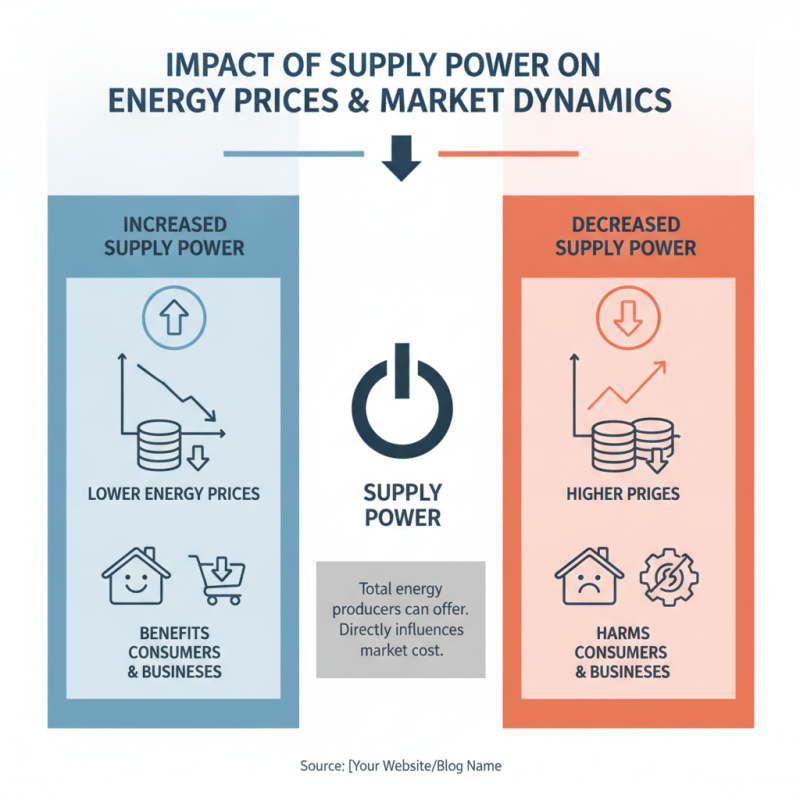
Supply power plays a crucial role in shaping energy prices and market dynamics. It refers to the total amount of energy that producers can offer at any given time. When supply power increases, it can lead to lower prices. Conversely, when supply power diminishes, energy prices often rise. This relationship significantly affects both consumers and businesses.
Market dynamics are influenced by various factors, including weather, technology, and regulatory changes. For instance, an increase in renewable energy sources can enhance supply power, leading to more stable prices. However, disruptions like natural disasters can reduce availability. This unpredictability creates challenges for market participants.
Understanding the nuances of supply power is vital. Companies and investors must remain vigilant about potential fluctuations. An over-reliance on certain supply sources can backfire. Markets need a balanced approach to manage risks effectively. As energy landscapes continually evolve, keeping an eye on supply power will remain essential.
Case Studies: Historical Fluctuations in Supply Power and Their Effects
Supply power plays a critical role in determining energy prices. Historical evidence reveals its fluctuations have significant impacts. For example, in 2008, power supply shortages led to a surge in electricity prices. According to the International Energy Agency, the average energy price increased by 48% as demand outpaced supply.
On the other hand, the 2020 pandemic illustrated a different scenario. With lockdowns, energy demand plummeted. The Energy Information Administration reported a 20% drop in the electricity consumption peak. This led to a decrease in supply power's influence, but the recovery phase saw prices rising again as demand rebounded. The volatility often catches consumers off guard; understanding these trends can help in planning.
Tip: Stay informed about historical data trends. Recognize that fluctuations can lead to price spikes. Sometimes, supply disruptions occur unexpectedly, so being proactive is crucial. Monitor news and reports regularly to navigate these changes effectively. An informed consumer can make better energy choices.
Impact of Supply Power on Energy Markets
This chart illustrates the fluctuations in supply power over the years 2018 to 2022, showing the impact on energy markets, with a trend of increasing supply capacity influencing market stability and pricing dynamics.

 Products
 News
News
 Whatsapp
 Skype
Skype
 Wechat