Top Power Supply Types You Should Know About?
Power supply is a critical component in any electronic device. Understanding the different types of power supplies can guide you in making informed decisions. Whether for home audio systems, computers, or industrial applications, knowing the right power supply enhances performance.
There are several key power supply types, each with unique features. For example, switching power supplies are efficient but can introduce noise. Linear power supplies offer stability, yet they may not suit every application due to size and cost. It’s vital to evaluate what fits your needs best.
Many users overlook essential details when selecting power supplies. Impacts of ripple voltage, load regulation, and efficiency ratings are often underestimated. Choosing the wrong type might lead to system failure or inefficiency. Understanding these elements fosters a more reliable electronic experience.
Overview of Power Supply Types and Their Importance
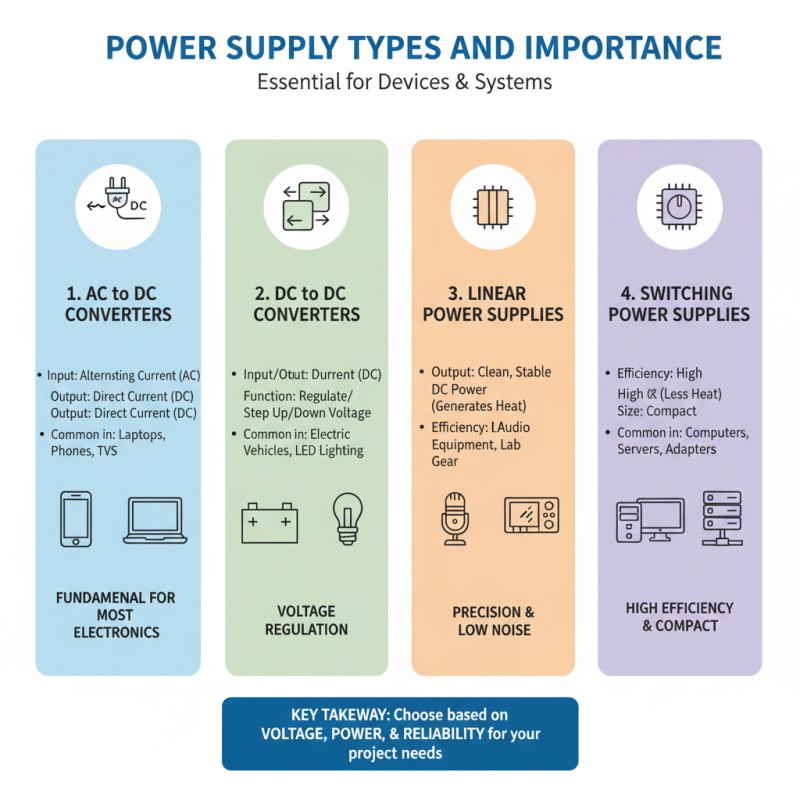
Power supply units are crucial in both everyday devices and complex systems. Each type serves specific needs based on voltage, power output, and reliability. Understanding these categories ensures you can make informed choices for your projects. AC to DC converters, for example, are fundamental for most electronic devices. They transform alternating current into a steady direct current.
Tips: Always check voltage levels. Mismatched voltages can damage components.
Linear power supplies provide a simpler design with low noise. However, they are less efficient and can generate excess heat. Switch-mode power supplies, on the other hand, are highly efficient but may introduce noise. Balancing these elements is essential for optimal performance.
Tips: Regular testing can identify inefficiencies. Consider thermal management in your design.
Recognizing the importance of power supply types can enhance your system’s reliability. Each option has pros and cons. Understanding these will help mitigate risks. Aim for a solution that meets your specific power needs while ensuring durability and performance.
Understanding Linear Power Supplies and Their Applications
Linear power supplies are essential for many electronic applications. They offer a stable and reliable voltage output. This stability is crucial for sensitive devices. Often, they are used in medical equipment, audio systems, and laboratory instruments. Their design features components like transformers, diodes, and capacitors. These components work together to reduce voltage and correct ripple.
However, linear power supplies have limitations. They can be inefficient, especially at lower load levels. This inefficiency leads to excess heat. Managing heat dissipation is vital. It requires space and effective cooling solutions. Additionally, linear supplies tend to be bulkier compared to switch-mode supplies. In tight spaces, their size can be a significant drawback.
Despite these challenges, linear power supplies are valued for their simplicity. They are easier to design and implement. Manufacturers often prefer them for low-noise applications. The low output ripple is a major benefit, ensuring clean power delivery. Understanding these characteristics helps in choosing the right supply for your needs. Careful consideration of application requirements is essential when making this decision.
Exploring Switching Power Supplies and Efficiency Benefits
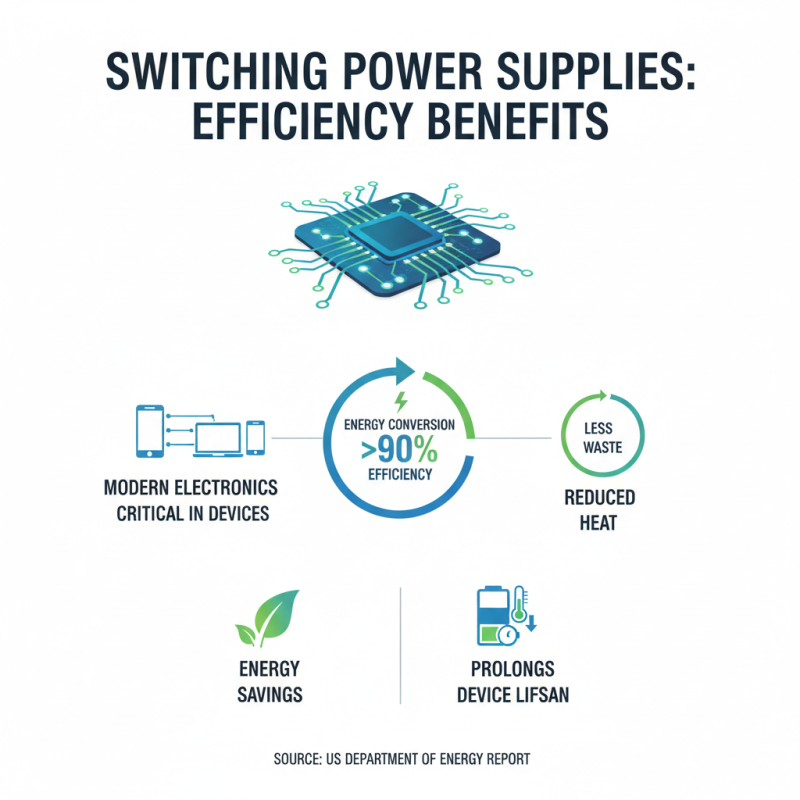
Switching power supplies are critical in modern electronic devices. They convert electrical energy efficiently, minimizing waste. According to a report from the U.S. Department of Energy, switching power supplies can achieve efficiencies exceeding 90%. This efficiency not only saves energy but also reduces thermal output, which can prolong the device's lifespan.
The benefits of switching power supplies extend beyond mere efficiency. They adapt to varying load conditions, making them highly versatile. For instance, they can operate across a wide input voltage range, ensuring steady performance. However, designing efficient switching supplies can be challenging. Engineers must balance size, cost, and cooling requirements. In some cases, manufacturers sacrifice certain features for a more compact design, leading to potential drawbacks like increased heat generation.
Despite these challenges, the trend toward higher efficiency continues. The International Energy Agency reports that energy-efficient technologies could reduce global energy demand by up to 30% by 2040. This highlights the need for continued innovation in manufacturing practices focused on improving the efficiency of power supplies. The transition to switching power supplies has significantly impacted energy consumption patterns, but ongoing efforts are essential to overcome the inherent design complexities.
Key Features of Uninterruptible Power Supplies (UPS)
Uninterruptible Power Supplies (UPS) are crucial for maintaining power continuity. They protect sensitive electronic devices from abrupt power failures. When a blackout occurs, a UPS provides backup power instantly. This feature is vital for businesses and homes that rely on technology.
Key features of UPS include battery backup, surge protection, and power conditioning. The battery backup allows devices to operate even during outages. Surge protection shields equipment from voltage spikes. Power conditioning ensures a stable supply, filtering out harmful interference. These elements work together to keep systems running smoothly.
Choosing the right UPS requires careful consideration. Capacity and runtime are crucial factors. Users often underestimate their power needs, leading to inadequate support. Evaluating potential equipment loads is essential. UPS maintenance also needs attention, as batteries degrade over time. Regular checks can help avoid unexpected failures.
Comparative Analysis of Power Supply Types for Different Needs
When selecting a power supply, it's crucial to understand the various types and their applications. Each power supply type has its pros and cons. For example, linear power supplies offer low noise but can be bulky. Switching power supplies, on the other hand, are compact and efficient, making them a popular choice for electronics. Assess your needs carefully before choosing.
Tips: Always consider the power requirements of your devices. Ensure the supply can handle peak loads. This can prevent operational issues.
Another option is uninterruptible power supplies (UPS). They provide backup power during outages. However, it's essential to evaluate how long they can sustain your equipment. Battery life and recharge time vary among models. Failing to understand these aspects can lead to disappointing performance.
Tips: Research the average power draw of your devices. This will help you select an appropriate UPS. Regularly test your backup systems to ensure reliability.

 Products
 News
News
 Whatsapp
 Skype
Skype
 Wechat