10 Essential Tips for Choosing the Right UPS Power Supply
Selecting the right UPS power supply is crucial for ensuring the reliability of your electrical systems. According to a recent report from the International Data Corporation (IDC), the global UPS market is projected to grow by 6.3% annually. This underscores the increasing importance of selecting quality power solutions. Industry expert Dr. John Mitchell states, "A reliable UPS power supply not only protects equipment but also enhances operational efficiency."
In this fast-paced digital age, businesses cannot afford downtime. A well-chosen UPS power supply can be the difference between seamless operation and catastrophic failure. However, many fail to account for critical factors like capacity, runtime, and load compatibility. Often, organizations overlook specific needs that could lead to inadequate power solutions.
A well-designed UPS power supply system can provide backup during outages and protect against power surges. Yet, many choose a system without fully understanding their requirements. This lack of insight can result in wasted resources and unanticipated downtime. Assessing your environment and load is essential for making informed decisions.

Understanding the Basics of UPS Power Supplies
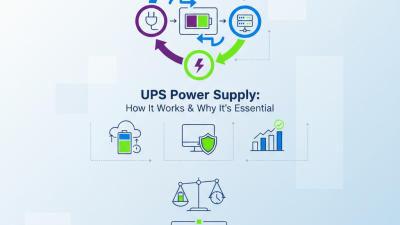
When selecting a UPS power supply, understanding the basics is crucial. A UPS, or Uninterruptible Power Supply, provides backup power during outages. It protects sensitive electronics by delivering consistent voltage. According to a study by ResearchAndMarkets, the global UPS market was valued at $8.65 billion in 2020, with a projected growth rate of 6.1% through 2027. This reflects a growing awareness of power reliability.
Most UPS systems fall into three categories: standby, line-interactive, and online. Standby UPS systems are cost-effective and suitable for home use. However, they may not provide sufficient power during severe outages. On the other hand, line-interactive systems adjust voltage fluctuations. They are versatile and can handle surges effectively. Online UPS systems deliver seamless power without interruptions. Yet, their complexity and cost can be drawbacks for some users.
It’s essential to assess your equipment's power requirements. For instance, servers typically need a power factor of 0.9 or greater. Additionally, consider runtime. Most UPS units provide between 5 to 30 minutes of backup power. This may not be enough for all situations, particularly during extended outages. Ensuring the right type of UPS means evaluating both immediate and future needs. Keep in mind that choices depend on specific circumstances and user requirements.
Identifying Your Power Requirements and Load Types
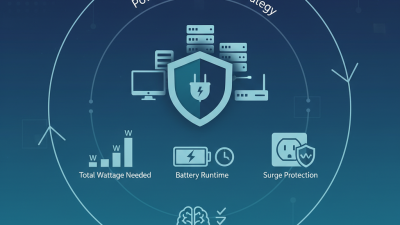
Choosing the right UPS power supply begins with understanding your power requirements and load types. Assess the devices you want to protect. Each device consumes a specific amount of power. Identifying total wattage is essential. You may find that your requirements vary by device type, such as servers, computers, or networking equipment. Each device has unique characteristics that affect power consumption.
Consider your setup's critical loads. Some devices need uninterrupted power, while others can tolerate short outages. For example, servers require a steady supply, but printers might not be as critical. Knowing the runtime you need during an outage is vital. This can affect the UPS capacity you choose.
Don't overlook the importance of future needs. Technology changes rapidly, and your power requirements may evolve. It's wise to factor in potential equipment upgrades. Sometimes, users discover they've underestimated their needs. This can lead to frequent power issues. Balancing current requirements with future expansions is key.
Power Supply Load Types
Evaluating UPS Capacity: VA Rating and Runtime Considerations
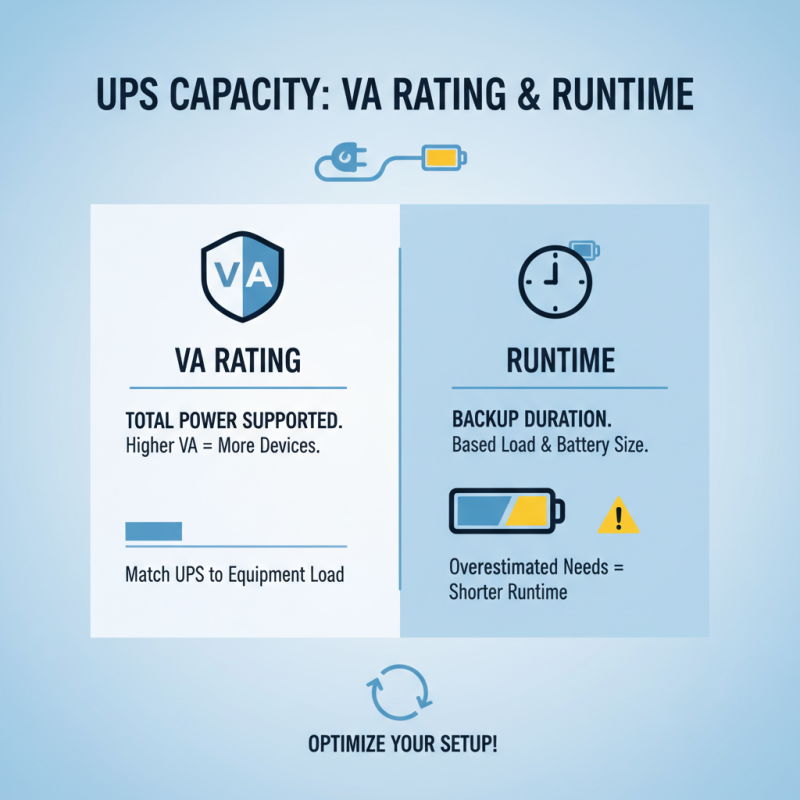
When evaluating UPS capacity, understanding VA rating and runtime is crucial. The VA (Volt-Ampere) rating indicates how much power a UPS can support. A higher VA rating means the UPS can handle more devices. However, it’s important to match the UPS capacity with the actual load of connected equipment. Many users overestimate their needs, leading to short runtimes.
Consider how long you want your devices to run during an outage. Runtime depends on the load and battery capacity. A UPS with a low load will last longer than one powering several high-demand devices. It’s wise to test different scenarios. You might find your ideal configuration after a few attempts.
Don't forget to assess your actual usage. Adding new devices increases load, affecting runtime. You might overlook this and face a surprise during an outage. Evaluating your needs regularly ensures your UPS is up to the task. Sometimes, adjusting expectations is necessary. This helps maintain reliability in unexpected circumstances.
Exploring Different UPS Technologies: Standby, Line-Interactive, and Online
When selecting a UPS power supply, it's crucial to understand the various technologies available.
Standby UPS systems are the most basic type. They provide battery backup during power outages,
with a simple switch to battery mode. This type is ideal for home use or small networks. However, they do have limitations in terms of response time
and cannot handle significant disruptions or power fluctuations effectively.
According to a report by the International Data Corporation (IDC), standby systems account for about 40% of the UPS market, indicating their popularity despite the drawbacks.
Line-interactive UPS systems offer enhanced features, bridging the gap between standby and online systems.
They can handle minor voltage fluctuations without switching to battery power, extending battery life. This technology is particularly useful for businesses with sensitive equipment.
A study by Techaisle suggests that line-interactive units have increased by 20% in adoption among small to medium-sized enterprises in recent years.
Users appreciate their efficiency and reliability, but over-reliance can lead to complacency in regular maintenance checks.
Online UPS systems are the most advanced. They provide continuous power and isolate equipment from all grid disturbances.
This feature makes them a preferred option for data centers and critical operations. However, their higher cost can be a barrier for smaller organizations.
Data from the IEEE indicates that while online UPS systems represent only a fraction of the market, their reliability is valued highly among industries that cannot afford any downtime.
Understanding these differences helps users make informed decisions when choosing a UPS power supply.
Assessing Additional Features: Outlets, Management Software, and Warranty Options
When selecting an uninterruptible power supply (UPS), the variety of additional features can significantly impact your decision.
Outlets are crucial.
Consider the number and types available. Some models offer a mix of standard and specialized outlets. This is important if you have diverse devices.
Ensure the UPS can accommodate your needs without overcrowding or sacrificing power quality.
Management software can enhance your UPS experience. It helps monitor power usage and battery health, providing peace of mind.
Look for software that offers alerts for potential issues. User-friendly interfaces make it easier to integrate your UPS into your existing system.
However, some software might not be fully compatible with all devices. Always check compatibility before making a final decision.
Warranty options are another vital aspect to evaluate. A robust warranty offers security against potential defects.
However, the terms can vary significantly. Some warranties cover only certain components, while others provide extensive coverage.
Take the time to read the fine print to avoid any surprises. This proactive approach will better prepare you for unexpected challenges.
Remember, thorough research is essential for making an informed choice.

 Products
 News
News
 Whatsapp
 Skype
Skype
 Wechat