Leave Your Message

2026 Top Power Supply Types for Global Buyers

Choosing a power supply is rarely just a matter of matching voltage and wattage. Global buyers must also consider installation conditions, load behavior, service access, and the destination market’s requirements. A compact AC-DC adapter may suit a retail device, while an enclosed industrial unit can better protect components from dust and accidental contact. Details matter.

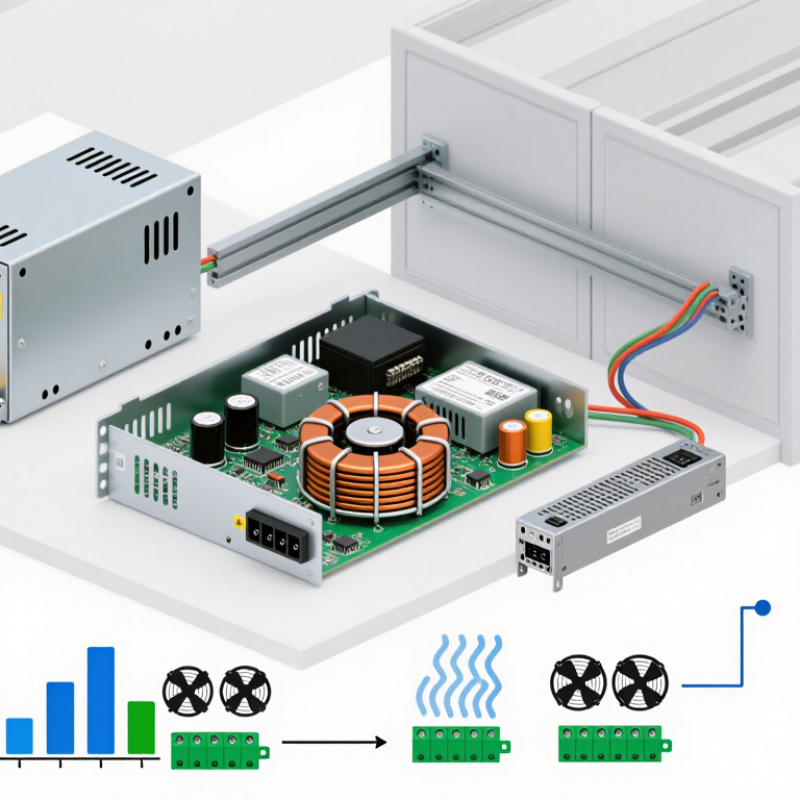
Common options include AC-DC converters, DC-DC converters, open-frame and enclosed units, DIN-rail supplies, modular systems, and redundant configurations. Each serves different needs. A DIN-rail model can simplify cabinet installation, while a modular supply may help equipment makers manage several output voltages. For mobile or space-limited equipment, size and cooling can matter as much as rated output. Not always obvious.

Before comparing prices, review the input-voltage range, output regulation, ripple, efficiency, thermal derating, and protection features. Check whether the supplier provides current datasheets, test information, and clear support contacts. Buyers should also confirm which approvals or markings apply to their specific product and destination; requirements can vary, so assumptions are risky. A label alone is not the whole story.

Reliable Supply Power starts with a clear understanding of the actual load and operating environment. Ask how the unit performs near its maximum rating, in a warm enclosure, or during startup. These practical questions can expose gaps that polished catalog images do not show. Even careful selection has limits: field conditions may differ from the test bench, so validation in the intended setup remains worthwhile.
2026 Top Power Supply Types for Global Buyers

What a Power Supply Does and How It Delivers Electrical Energy

A power supply takes electrical energy from a source and makes it usable by equipment. Many devices need steady low-voltage DC, while wall outlets provide AC. Inside the supply, circuits convert the input, smooth electrical ripple, and regulate the output. Some designs also provide electrical isolation. The result travels through a cable or circuit board to components such as a sensor, screen, or motor. A small voltage change can matter: a device may reset, heat up, or behave inconsistently when its supply cannot meet demand.

Tips: Check the input-voltage range, output voltage, current rating, and connector. Leave reasonable current headroom for startup surges. Keep vents clear; a warm enclosure is common, but blocked airflow can shorten service life.

For global buyers, compare supply types with the device and operating environment in mind. A switching supply is often compact and efficient; a linear supply may offer low electrical noise, but can be heavier and warmer. In practice, matching the numbers is not always enough. Cable length, ambient temperature, and load changes affect performance too. Review the product’s test data and relevant regional certifications, then confirm that the exact model suits the destination and application. A tidy label helps, but it does not replace checking the specification.


How Power Supply Designs Differ in Converting and Regulating Power

Power supplies convert incoming energy into a form that equipment can use, then keep the output within a target range. The conversion method shapes heat, noise, size, and efficiency. That trade-off matters.

A linear supply typically transforms and rectifies AC, then regulates voltage by dissipating excess energy as heat. It can provide a quiet output, useful for sensitive measurement circuits. Heat is visible. Under a heavy load, a warm enclosure may reveal poor efficiency or limited cooling. A switch-mode supply instead switches power at high frequency and uses inductors, capacitors, and feedback to control the output. It is often smaller and more efficient, but switching ripple and electrical noise need careful filtering and layout. Noise is not always obvious on a basic meter.

AC-to-DC designs serve equipment powered from an AC source, while DC-to-DC converters adjust one DC voltage to another. Some designs add electrical isolation through a transformer; others share an input and output ground. These choices affect safety, grounding, and system integration, so the application’s requirements should be checked against the supply’s specifications. During evaluation, compare output stability under changing loads, not just the voltage printed on the label. A supply may look suitable on paper and still respond slowly when a motor starts. That detail is easy to miss.

2026 Top Power Supply Types for Global Buyers — How Power Supply Designs Differ in Converting and Regulating Power
Power Supply Type Power Conversion Typical Input and Output Regulation and Isolation Indicative Efficiency Key Advantages Common Applications
Linear Regulator Supply Reduces excess voltage as heat using a pass element; does not switch energy at high frequency. Usually regulated DC input to a lower, fixed DC output. Provides straightforward voltage regulation. Isolation is not inherent and must be provided elsewhere if required. Often about 30–60%, depending strongly on the input-to-output voltage difference and load. Low output noise, simple circuitry, and fast response to load changes. Low-noise analog circuits, sensor equipment, and small embedded systems.
AC–DC Switching Supply Rectifies mains AC to DC, then switches and converts it through a high-frequency power stage. Commonly designed for a specified regional mains range, such as 100–240 V AC, with a regulated DC output. May use an isolated or non-isolated topology. Regulation is typically provided by feedback control. Often about 85–95% for well-designed products, depending on load and power level. Compact size and good efficiency across a broad range of output powers. Consumer electronics, industrial controls, networking equipment, and general-purpose adapters.
Flyback Converter Stores energy in a magnetic component during one switching interval and transfers it to the output during another. Typically converts DC after rectification into one or more DC outputs; commonly used at low-to-medium power. Can provide galvanic isolation with a transformer. Supports multiple outputs, though cross-regulation can vary by load. Often about 75–90%, depending on power, switching frequency, and design. Relatively simple, cost-effective, and suitable for multiple output voltages. Chargers, standby supplies, auxiliary rails, and compact low-to-medium-power AC–DC supplies.
Forward Converter Transfers energy through a transformer while the switching element is on; output inductance smooths the current. Usually converts DC to a regulated, lower DC output; commonly used at medium power. Transformer-based designs can provide galvanic isolation. Output regulation is controlled through switching duty cycle. Often about 80–92%, depending on implementation and operating conditions. Good power handling and output-current capability compared with a basic flyback design. Industrial power units, telecom equipment, and isolated DC–DC conversion.
Buck (Step-Down) Converter Switches an input DC voltage and filters it to produce a lower DC voltage. DC input to lower DC output; the output must generally remain below the input. Regulates output by adjusting switching duty cycle. Standard buck designs are non-isolated. Often about 85–97%, depending on voltage ratio, load, and component selection. Efficient step-down conversion with good suitability for compact designs. Point-of-load regulators, processors, battery-powered products, and automotive electronics.
Boost (Step-Up) Converter Stores energy in an inductor and combines it with the input to produce a higher DC output. DC input to higher DC output; a standard boost converter does not normally regulate below its input. Regulates output through switching control. Standard boost designs are non-isolated. Often about 80–95%, depending on input/output ratio and load. Raises a low DC voltage without requiring a transformer. LED drivers, battery-powered systems, and DC bus voltage elevation.
Buck–Boost Converter Uses switching and energy storage to produce an output that can be above or below the input, depending on topology. DC input to regulated DC output; some versions also support output polarity inversion. Usually non-isolated. The exact input/output behavior depends on whether the design is inverting, non-inverting, or four-switch. Often about 80–95%, depending on topology, conversion ratio, and load. Maintains a regulated output when the input voltage varies across the target output voltage. Battery-powered equipment, automotive electronics, and systems with wide-ranging DC inputs.
LLC Resonant Converter Uses a resonant network and high-frequency transformer to transfer power, often with soft switching. Commonly used for isolated DC–DC conversion, often downstream of an AC–DC front end. Provides galvanic isolation through the transformer. Output is regulated by controlling switching frequency or related operating parameters. Often about 90–96% in suitable operating ranges and well-optimized designs. High efficiency and reduced switching losses in designs suited to its operating range. Higher-power adapters, server supplies, displays, and other efficiency-focused equipment.
Modular Power Supply Combines standardized or configurable power modules to provide selected outputs or scalable power capacity. Input and output depend on the module system; available designs include AC–DC and DC–DC configurations. Isolation, regulation, and protection features vary by module and system architecture. Design-dependent; commonly comparable to the underlying converter topology. Flexible configuration, easier maintenance, and potential for system-level expansion. Industrial automation, medical and test systems, communications, and configurable equipment.
Selection note: Efficiency figures are indicative design ranges, not guaranteed product ratings. Actual performance depends on input and output voltage, load, temperature, switching frequency, component choices, and applicable safety and regulatory requirements. Confirm operating range, isolation requirements, protection features, thermal limits, and regional approvals for the intended application.

Major Power Supply Types and Their Typical Applications

AC-DC supplies convert utility current into regulated DC for control panels, appliances, and chargers.

Switch-mode designs are compact and efficient, making them common in equipment racks and industrial cabinets.

Linear supplies produce low electrical noise for test benches and sensitive audio circuits, but shed more energy as heat. Quiet, but inefficient.

DC-DC converters adjust voltage inside vehicles, telecom systems, and battery-powered instruments.

UPS units provide temporary backup for servers and medical equipment during outages.

Application scale matters. The IEA’s Electricity 2024 report estimated data centres, AI, and cryptocurrency used about 460 TWh of electricity in 2022; demand could exceed 1,000 TWh by 2026.

That forecast highlights growing demand for efficient, reliable power conversion, but it does not make one supply type right for every installation.

Check load range, startup current, ambient temperature, and maintenance access. A compact unit can still overheat in a sealed cabinet.

Tips: Match supply output to the load, then leave thermal and capacity margin. Check the heat. Confirm the required noise level and backup time before choosing. Real installations are rarely as tidy as a datasheet suggests.

How Regional Standards and Operating Conditions Affect Compatibility

A power supply that works in one country may fail to fit another installation. Buyers should check the input-voltage range, frequency, plug style, and required safety markings for the destination market. A plug adapter changes the connection, not the voltage. Small details matter.

Regional mains commonly differ in voltage and frequency, while local requirements can also affect grounding, insulation, and documentation. Confirm the unit’s specifications against the actual site supply, not just a product listing. For a large deployment, have a qualified engineer or testing body review the relevant requirements. A neat comparison chart cannot settle every case.

Operating conditions matter just as much. A supply installed inside a sealed cabinet may run hotter than one on an open test bench. Check the manufacturer’s derating curves for ambient temperature, altitude, and airflow, then allow headroom for startup current and changing loads. Dust, humidity, and vibration can also affect service life. These checks can feel fussy, and buyers sometimes skip them under schedule pressure. I would not assume a laboratory rating predicts performance in every field installation.

2026 Top Power Supply Types for Global Buyers

How Regional Standards and Operating Conditions Affect Compatibility

These are typical nominal household supply voltages: Japan 100 V, the United States and Canada 120 V, and the European Union, United Kingdom, India, and Australia 230 V. Frequency is typically 60 Hz in the United States and Canada, 50 Hz in the EU, UK, India, and Australia, and 50 or 60 Hz in Japan depending on the region. A 100–240 V, 50/60 Hz power supply can cover these voltage and frequency ranges, but buyers should also verify plug type, grounding, local standards, and the equipment’s rated operating conditions.

What Global Buyers Should Compare When Choosing a Power Supply

Global buyers should compare a power supply at the load and temperature they will actually use. A high wattage label can mislead. Check continuous output, peak-load handling, input-voltage range, and operating temperature. For a factory cabinet, a unit rated for 40°C may need derating in a hot enclosure. Also compare efficiency at typical load, not only at peak efficiency. IEA’s Electricity 2024 report estimates data centres used about 460 TWh in 2022 and could exceed 1,000 TWh by 2026. Though that forecast concerns data centres, it underscores why conversion losses and heat deserve careful review.

Check the curve. Ask suppliers for efficiency curves, ripple and regulation limits, protection features, and test conditions. Confirm that the supply’s connectors and dimensions fit the equipment, and that its input range suits the destination market. Compare documented safety and electromagnetic-compatibility certifications against the product’s intended use; paperwork should match the exact model, not a similar family member. I would recheck this detail, since purchasing sheets can be incomplete.

Tips: Request test results at your expected load and ambient temperature. Compare warranty terms, lead times, and replacement availability too. A slightly cheaper unit may cost more if it runs hot or needs frequent replacement. Look closely at the small print.