Top Switching Power Supply Types Explained for Your Needs?
In the world of electronics, understanding the various types of Switching Power Supply is crucial. Renowned expert Dr. Emily Carter, a leading figure in power electronics, emphasizes, "Choosing the right power supply type can significantly impact efficiency and performance." This insight highlights the importance of selecting the optimal Switching Power Supply for specific applications.
Switching Power Supplies come in multiple designs, each tailored for unique purposes. With developments in technology, these supplies are becoming increasingly prevalent in everyday devices. However, many users still struggle with understanding the nuances of each type.
Despite the extensive information available, it's easy to overlook details that make a difference. Mistakes in selection can lead to inefficiencies and higher costs. By exploring various types of Switching Power Supply, we aim to demystify the complexities. This journey will help you make an informed choice that fits your needs precisely.

Types of Switching Power Supplies: An Overview of Key Variants
Switching power supplies are crucial in modern electronics. They convert electrical energy efficiently across various applications. An overview reveals several key variants: buck converters, boost converters, and flyback converters. Each type serves unique purposes and offers distinct benefits.
Buck converters step down voltage while boosting current efficiency. They are widely used in battery-powered devices. Boost converters, on the other hand, increase voltage while reducing current. This is essential for applications requiring higher power levels. Flyback converters provide isolation and are widely used in power adapters. A recent market analysis shows that the global switching power supply market is projected to reach $48.8 billion by 2027. However, challenges like thermal management and electromagnetic interference remain pressing issues that necessitate thoughtful design considerations.
Electronics engineers and developers must carefully select the right type based on their specific needs. Understanding the trade-offs between efficiency, size, and cost is vital. The proper choice can significantly affect system performance and longevity. In the evolving landscape of power supply technology, staying informed about the latest advancements is essential for optimizing designs.
Top Switching Power Supply Types Explained for Your Needs
| Type |
Description |
Efficiency (%) |
Typical Output Voltage |
Common Applications |
| Buck Converter |
Steps down voltage while stepping up current. |
85-95 |
3.3V - 24V |
DC-DC conversion, battery chargers. |
| Boost Converter |
Steps up voltage while stepping down current. |
85-95 |
5V - 30V |
LED drivers, portable device power. |
| Buck-Boost Converter |
Can increase or decrease voltage as needed. |
80-90 |
3.3V - 15V |
Solar power applications, automotive systems. |
| flyback Converter |
Used for low-power applications with isolation. |
70-85 |
5V - 48V |
Power adapters, low-power TVs. |
| Forward Converter |
Provides good efficiency and lower voltage drop. |
80-90 |
5V - 60V |
Power supply for telecom equipment. |
Benefits of Using Buck, Boost, and Buck-Boost Converters in Applications
Switching power supplies are vital in numerous applications, leveraging innovative converter types to meet specific power requirements. Buck, boost, and buck-boost converters are three common types, each serving unique functions in power management. According to recent industry reports, the global power supply market is projected to reach $40 billion by 2026. This growth highlights the increasing reliance on these conversion technologies.
Buck converters are efficient for stepping down voltage. They provide lower output voltage while maintaining high efficiency, often exceeding 90%. This makes them ideal for battery-powered applications. Boost converters, on the other hand, increase voltage output. They are essential when a device requires a voltage higher than the power source. Their ability to function in low-power scenarios is noteworthy. Buck-boost converters can both step up and step down voltage, offering versatile solutions for varying demands. This flexibility is beneficial in applications like electric vehicles and renewable energy systems.
Tips: Select converters based on load requirements. Always consider efficiency ratings. Inefficiencies can lead to overheating and reduced lifespan.
Relying heavily on one converter type can create limits. Applications may be better served by using multiple converter types. Diverse needs often require tailored solutions. Power management strategies should accommodate future scalability and technology changes. Assessing the application's evolving needs ensures optimal performance and efficiency.
Top Switching Power Supply Types Explained for Your Needs
Efficiency Ratings and Performance Metrics for Different Power Supply Types
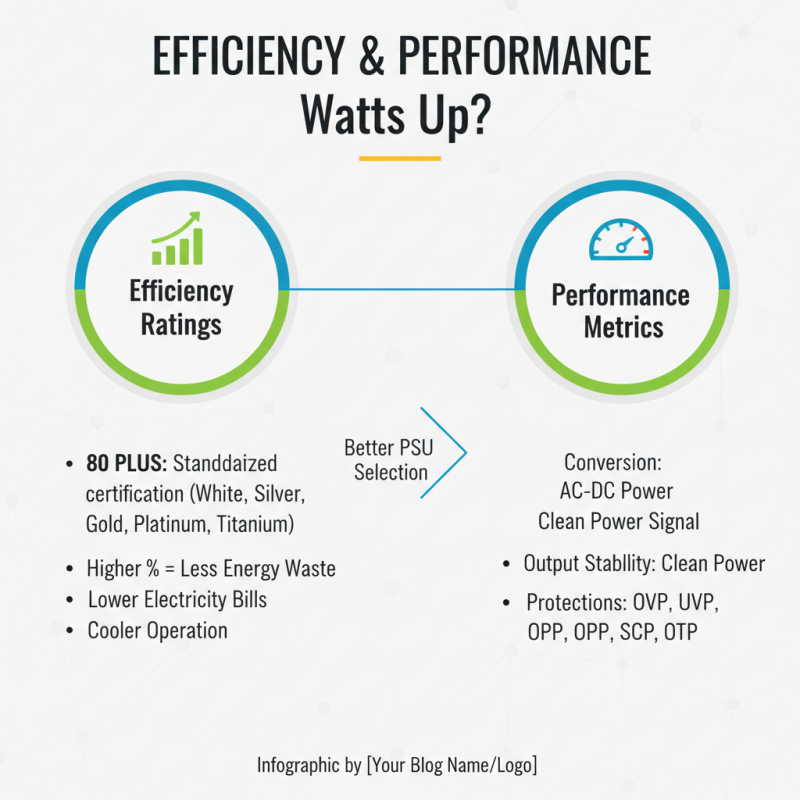
When choosing a switching power supply, understanding efficiency ratings and performance metrics is vital. Efficiency ratings indicate how well a power supply converts input power to output power. A higher rating means less energy is wasted, translating to lower electricity bills and cooler operation. Common ratings include 80 PLUS, which denotes high efficiency, helping you select models that align with your requirements.
Keep in mind that performance metrics, such as load regulation and ripple voltage, also play a critical role. Load regulation measures how well the supply maintains output voltage under varying load conditions. Ripple voltage refers to the fluctuations in output voltage. Lower ripple ensures stable power, essential for sensitive electronic devices.
Tip: Always verify the specifications before making a purchase. Not all power supplies are created equal. Research different metrics to find the right fit for your needs. Balancing efficiency and reliable performance can be challenging, so consider your specific applications carefully.
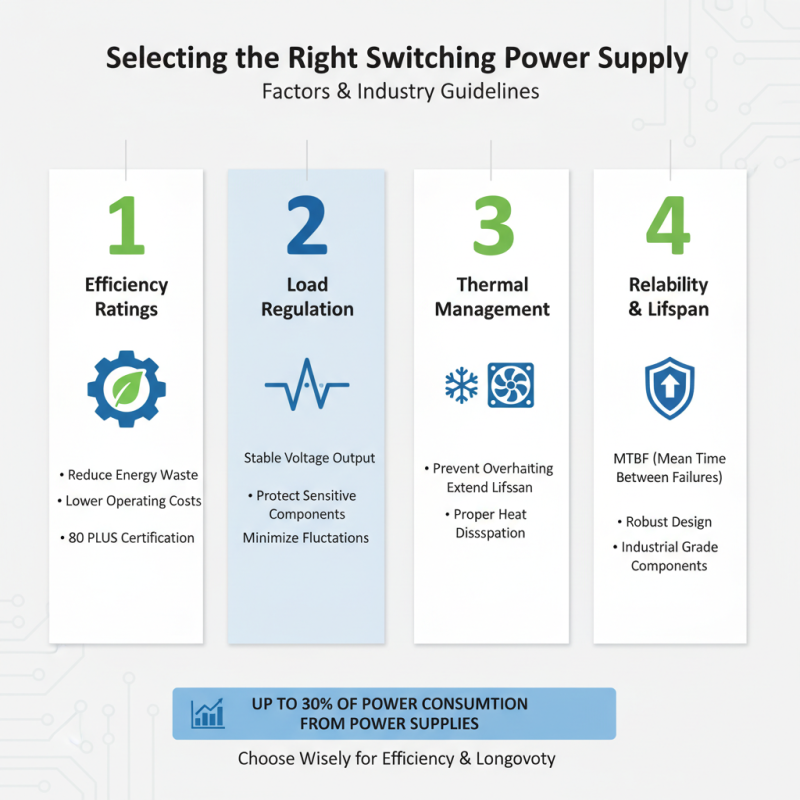
Selecting the Right Switching Power Supply: Factors and Industry Guidelines
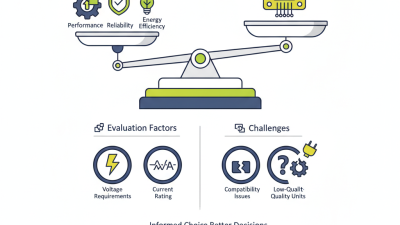
Selecting the right switching power supply is crucial for efficiency and reliability. According to reports, up to 30% of power consumption in commercial facilities comes from power supplies. This highlights the need for careful selection based on specific requirements. Factors such as load regulation, efficiency ratings, and thermal management should be prioritized.
Power supplies vary widely in performance. Many contemporary designs boast efficiencies above 90%, but these require stringent thermal control. Higher efficiency means less heat, yet impacts on system design can be overlooked. Users should consider not only the performance metrics, but also the operating environment. Additionally, some power supplies may not perform well under certain conditions, such as high humidity or extreme temperatures.
Industry guidelines recommend evaluating the total cost of ownership, not just the initial purchase price. A reliable power supply saves costs over time through reduced energy use. However, manufacturers often underreport inefficiencies. Users must demand transparency in performance data. Understanding these factors empowers better decision-making and improves overall system reliability.
Latest Trends in Switching Power Supply Technologies and Innovations
The landscape of switching power supply technologies is rapidly evolving. Recent industry reports indicate a significant shift towards more compact and efficient designs. The demand for high-performance power supplies is increasing, driven by sectors like consumer electronics and renewable energy. According to a report from MarketsandMarkets, the global switching power supply market is projected to reach $27 billion by 2025. This suggests a robust growth trajectory fueled by innovation and demand.
One of the latest trends is the rise of digital power management systems. These systems improve efficiency and reduce energy consumption. Enhanced control algorithms allow for real-time adjustments, optimizing performance under varying loads. An example of this trend is the use of digital controllers that enable precise voltage regulation. However, challenges remain, such as the complexity of implementation and integration into existing systems.
Another noteworthy innovation is the growing focus on sustainability. Many manufacturers are adopting eco-friendly practices in design and production. Reports highlight a shift toward materials and processes that reduce environmental impact. Nonetheless, balancing performance and sustainability is not straightforward. Striking this balance will require continued innovation and reflection on current methodologies.

 Products
 News
News
 Whatsapp
 Skype
Skype
 Wechat