Top Power Supply Manufacturers in China for Global Buyers?
The global demand for reliable and efficient power supply solutions continues to grow. As electronics and technology evolve, the role of power supply manufacturers becomes increasingly critical. In China, numerous manufacturers specialize in this essential area. They cater to both domestic and international markets.
With a focus on innovation and quality, these companies strive to meet diverse needs. However, challenges exist. Competition is intense, and not all products meet high standards. Buyers must navigate this landscape carefully. Understanding the strengths and weaknesses of different manufacturers is vital.
Power supply reliability directly impacts device performance and customer satisfaction. This article aims to highlight key players in China's power supply industry. It will provide insights into their capabilities and product offerings, equipping global buyers with the knowledge needed to make informed decisions.
Overview of Power Supply Manufacturing in China
China has established itself as a leading hub for power supply manufacturing. Recent market reports indicate that the country holds over 35% of the global market share in power supply units. This dominance stems from its advanced manufacturing capabilities and a robust supply chain network. Local manufacturers utilize cutting-edge technology to produce various power supply units, including AC-DC converters and DC-DC converters.
The industry has shown impressive growth, fueled by increasing demand from sectors such as electronics and renewable energy. According to a recent industry analysis, the revenue generated by the power supply manufacturing sector in China is projected to reach $50 billion by 2025. However, this growth also brings challenges. Many manufacturers face strict regulations that require continuous adaptation to new environmental standards.
Moreover, while production volume remains high, concerns over quality control persist. Reports suggest that nearly 20% of power supply products do not meet international testing standards. This indicates a significant area for improvement. Addressing these issues will be crucial for Chinese manufacturers to maintain global competitiveness and ensure product reliability.
Overview of Power Supply Manufacturing in China
Key Factors Driving Power Supply Production in China
China has emerged as a powerhouse in power supply manufacturing. Several factors contribute to this remarkable growth. Firstly, the country boasts a robust supply chain, enabling rapid production and delivery. Advanced manufacturing technologies are widely adopted, enhancing efficiency and quality. Additionally, a growing demand for renewable energy solutions drives innovation in power supply designs.
Tips: When sourcing power supplies, consider the manufacturer's production capacity. This ensures they can meet your demands. Furthermore, understanding their compliance with international standards is crucial for reliability.
Labor costs in China are relatively lower, allowing for competitive pricing. However, businesses must be cautious. Quality control is vital, as not all manufacturers guarantee the same standards. Choosing a supplier with a strong reputation can mitigate risks associated with subpar products.
Tips: Regularly assess the supplier's quality assurance processes. Don't hesitate to request samples for evaluation. This can save you from potential pitfalls in the long run.
Leading Power Supply Manufacturers in China: A Detailed Analysis
When diving into the landscape of power supply manufacturers in China, it's essential to identify key players. The market is vast, comprising numerous companies with varying specialties. Some focus on industrial applications, while others cater to consumer electronics. Understanding these segments can help global buyers make informed decisions.
Many manufacturers emphasize quality and efficiency. A focus on advanced technology can often lead to better performance and reliability. Buyers should consider their specific needs and how each manufacturer aligns with these requirements. Evaluating certification and compliance with international standards is crucial for ensuring quality.
Tips: Always ask for product samples before making large orders. This step can reveal the brand's true reliability. Don't skip the due diligence phase: research company histories and customer reviews.
A competitive market means prices can vary greatly. Some manufacturers may offer lower prices, but this often comes at the expense of quality. Be wary of deals that seem too good to be true, as they might not meet your expectations. Understanding the landscape will allow you to spot quality solutions amidst the competition.
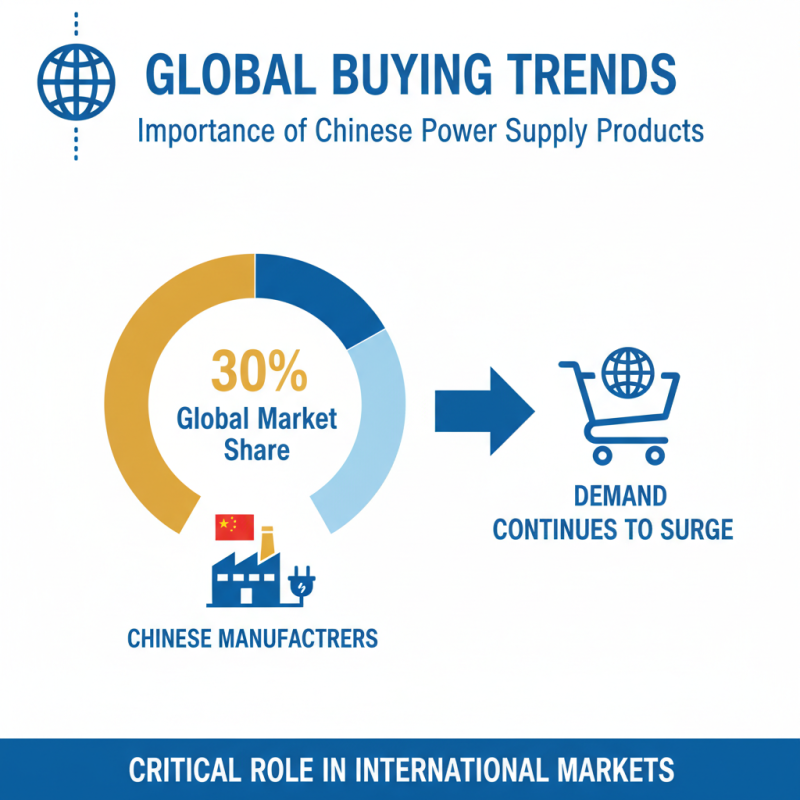
Global Buying Trends: Importance of Chinese Power Supply Products
The demand for power supply products from China continues to surge among global buyers. According to a recent industry report, approximately 30% of the global power supply market is dominated by Chinese manufacturers. This trend underscores the critical role that Chinese suppliers play in international markets.
Chinese power supply products are known for their cost-effectiveness and rapid development cycles. However, the reliance on these products raises valid concerns about quality standards. Reports indicate that while many manufacturers comply with international norms, inconsistencies remain. For example, a study revealed that around 15% of power supplies fall short of promised efficiency levels.
With the advent of new technologies, buyers are increasingly looking for not just affordability but also reliability. The increasing push for renewable energy sources puts pressure on manufacturers to innovate. Nonetheless, many companies struggle to meet both regulatory requirements and consumer expectations in a fast-evolving landscape. This presents a challenge, as trusting suppliers while seeking cost-effective options is no small feat for global buyers.
Challenges Faced by Chinese Power Supply Manufacturers in the Global Market
Chinese power supply manufacturers face unique challenges in the global market. Many struggle with fierce competition from established brands. This saturation makes it hard for newcomers to gain visibility. Additionally, ensuring product compliance with international standards can be daunting. These regulations vary widely across regions, demanding significant resources.
Another major hurdle is the reputation for quality. Some manufacturers still battle preconceived notions regarding product reliability. Building lasting trust with global clients takes time and consistent delivery of high-quality products. Language barriers can also exacerbate misunderstandings, impacting negotiations and partnerships.
Tips: Understand your target market. Research specific standards that apply to your products. Consider hiring local experts for insights. Stay informed about competitor activities to differentiate your offerings. Focus on building a strong brand presence through testimonials and case studies. Networking in global trade shows can also enhance visibility.

 Products
 News
News
 Whatsapp
 Skype
Skype
 Wechat