Top 10 Power Adapter Suppliers for Global Buyers
Choosing the right Power Adapter supplier can shape product safety, delivery stability, and customer trust across international markets. Global buyers often compare far more than unit prices. They examine output accuracy, thermal performance, connector compatibility, warranty support, and production capacity.
This guide introduces ten established Power Adapter suppliers for different purchasing needs. Some focus on compact adapters for consumer electronics. Others serve medical equipment, industrial controls, networking devices, or high-volume retail programs. Their strengths may include efficient manufacturing, customized designs, traceable components, or strong engineering teams. Practical evaluation matters. A supplier with impressive certifications may still struggle with communication or inconsistent lead times.
Look beyond the brochure.
The comparison considers real purchasing concerns, including input voltage ranges, USB-C and other connector options, energy-efficiency performance, testing procedures, minimum order quantities, and global shipping experience. It also highlights how suppliers handle samples, design changes, factory audits, and after-sales claims. These details often become visible only after the first order, when assumptions become expensive.
No ranking can fit every buyer. Requirements differ by region, device type, budget, and risk tolerance. Certification requirements may also change, so buyers should verify current documentation directly with each supplier. A careful review should include product samples, technical datasheets, independent testing when appropriate, and clear commercial terms. The list offers a useful starting point, not a substitute for due diligence. That distinction matters.
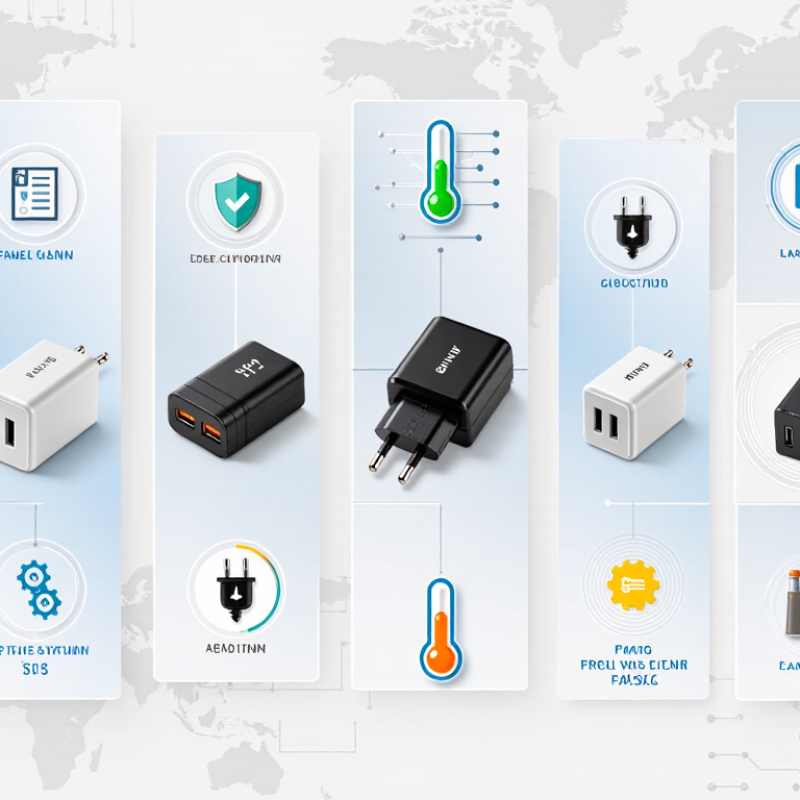
Power Adapter Basics and Key Selection Criteria
A power adapter converts mains electricity into the voltage and current required by a device. Check the output voltage, current rating, connector size, and polarity before comparing suppliers. A mismatch can cause overheating, unstable performance, or permanent damage. Small details matter.
For global buyers, input range is essential. A suitable adapter may support 100–240V AC and operate at 50 or 60 Hz. Look for clear safety markings, flame-resistant housing, strain relief, and protection against short circuits, overvoltage, and overheating. Efficiency also affects energy use and operating temperature. Do not trust a product photo alone. Request test reports, technical drawings, samples, and batch inspection records. In my experience, connector fit is often overlooked. It should not be.
Supplier selection requires more than a low unit price. Review production capacity, quality-control procedures, minimum order quantities, lead times, warranty terms, and packaging strength. Ask whether the supplier can maintain consistent output across repeated orders. One sample may perform well while later batches vary. That possibility deserves attention. For a top-ten supplier shortlist, compare documentation quality, communication speed, customization ability, and after-sales response. Confirm shipping voltage requirements for each destination, because assumptions can become expensive. A practical evaluation sheet makes those differences visible.
How the Top 10 Suppliers Are Evaluated
Top 10 Power Adapter Suppliers for Global Buyers
The top 10 suppliers are evaluated through evidence, not attractive catalogs. Buyer experience matters, especially with repeated orders and difficult shipping conditions. We review production history, application knowledge, and the supplier’s ability to support different voltage requirements. Factory visits, production photographs, and traceable sample records provide stronger proof than sales claims.
Technical evaluation begins with output stability, protection functions, energy efficiency, and thermal performance. Test samples should operate under low input voltage, maximum load, and extended use. We examine certification documents, test dates, laboratory details, and model consistency. Documents can look complete yet remain outdated. That weakness deserves attention. A supplier should explain design changes clearly and provide updated reports when components change.
Reliability also includes communication and delivery discipline. We compare quoted lead times with actual shipment records, packaging quality, inspection procedures, and response speed after a fault. Spare-unit policies and clear warranty terms reduce operational risk. Small details matter, such as readable labels, secure cable joints, and cartons that survive humid warehouses. Price is recorded, but it is not the main score. An inexpensive adapter can create costly returns. Evaluation is never perfectly objective; sample results may not represent every production batch. Independent inspections and periodic retesting make the ranking more credible. Test again.
Regional Strengths and Global Supply Capabilities
Regional strength shapes how power adapter suppliers serve global buyers. East Asia often provides deep component networks, automated assembly, and competitive volume pricing. Buyers can request pilot samples, factory photographs, and production records before approving large orders. Small details matter. A stable connector fit can prevent thousands of field returns.
Southeast Asia offers growing manufacturing capacity and useful supply-chain diversification. Its facilities may support flexible production, though material availability can vary between industrial zones. European suppliers often bring strong engineering documentation and careful testing for specialized applications. North American suppliers may respond quickly to custom requirements, local warehousing, and shorter delivery routes. These advantages are not universal. Each factory needs verification.
Global capability depends on more than export experience. Reliable suppliers should explain input voltage ranges, thermal performance, protection functions, and applicable safety requirements. They should also provide traceable test reports, consistent labeling, and clear warranty procedures. During supplier evaluations, buyers can compare minimum order quantities, packaging tests, port options, and backup production sites. A practical audit should inspect soldering quality, cable strain relief, and final inspection records. We have seen polished samples fail under repeated bending. That uncomfortable finding changed our review process. Regional reputation helps, but current evidence matters more. Delivery promises can also weaken during peak seasons, so buyers should confirm capacity before signing.
Comparing Certifications, Pricing, Customization, and Support
Choosing a power adapter supplier requires more than comparing unit prices. Global buyers should verify relevant safety certifications, test reports, and factory quality controls. Requirements differ by destination, voltage, plug type, and product category. A certificate copied into a sales file proves little without traceable laboratory details.
Pricing needs a full-cost review. Include tooling, samples, packaging, freight, testing, and warranty handling. The lowest quotation may hide weak components or inconsistent output. During supplier discussions, request load-test data, temperature records, and production samples. Customization can include housing colors, cable lengths, labels, connectors, and firmware settings. However, every change can affect compliance, minimum order quantities, and delivery time. Support matters after shipment too. Reliable teams provide clear drawings, responsive engineering help, and replacement procedures. I have found that fast replies are useful, but documented answers are safer. My own assessment can still miss factory realities.
Tips: Compare certification scope, not just logos. Ask for recent samples. Confirm pricing in writing. Test pilot batches before scaling. Leave room for delays; schedules often look too perfect.
Top 10 Power Adapter Suppliers for Global Buyers
Comparing Certifications, Pricing, Customization, and Support
The chart uses a normalized 0–100 procurement benchmark. Certification coverage reflects commonly requested approvals such as CE, FCC, UL, UKCA, RoHS, and ERP. Pricing competitiveness is scored higher for lower total landed cost, while customization and support reflect engineering flexibility, MOQ options, documentation, warranty handling, and response capability.

 Products
 News
 Whatsapp
 Skype
 Wechat