How to Choose the Right UPS Power Supply for Your Needs?
Choosing the right UPS power supply is crucial for ensuring the reliability of your electronic devices. According to John Smith, a renowned expert in the UPS industry, "A well-selected UPS can be the backbone of your power management strategy." This advice resonates deeply in today's technology-driven landscape where power outages can lead to significant data loss and equipment damage.
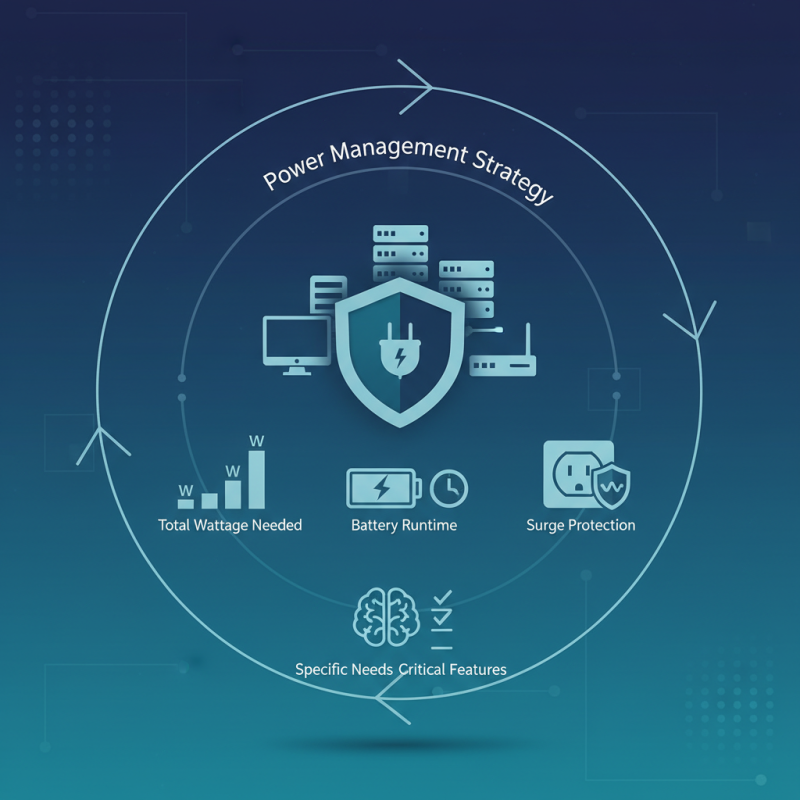
When selecting a UPS power supply, consider your specific needs. Think about the devices you want to protect. Their power requirements vary widely. You must calculate the total wattage needed. Additionally, battery runtime is essential. A short runtime might leave you vulnerable during outages.
Moreover, acknowledge that not every UPS fits every need. Some units might lack features critical to your setup. Reflect on this before making a choice. For instance, a unit without surge protection can be a risky investment. Many overlook these details, only to regret their choices later. Selecting a UPS isn't just about picking the cheapest option; it's about securing your technology for the long haul.
Understanding the Basics of UPS Power Supplies
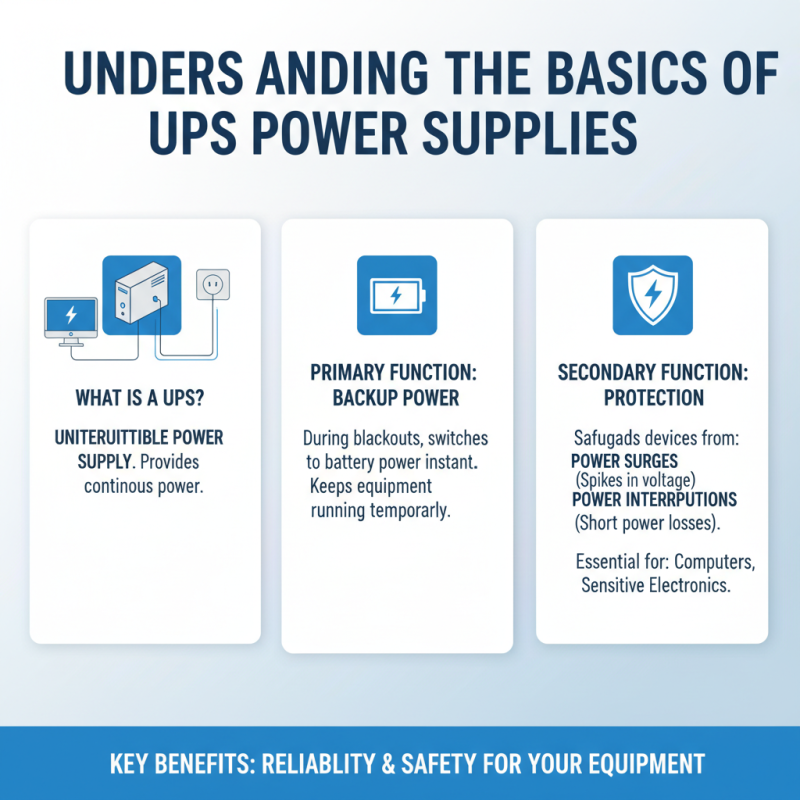
When selecting a UPS power supply, it is crucial to understand the basics of its functions. A UPS, or uninterruptible power supply, provides backup power during outages. It also helps protect equipment from power surges and interruptions. This is essential for sensitive devices like computers and servers.
There are different types of UPS systems. The most common are standby, line-interactive, and online models. Each type has its unique advantages and limitations. For instance, standby UPS systems are simpler. They can switch to battery during outages. However, they may not be suitable for critical applications.
Capacity is another key factor. You must know the total wattage of your devices. It's not always obvious what you need. Sometimes, people underestimate their requirements. It is better to have a little extra capacity. This can accommodate future devices or unexpected power demands. Checking runtime and battery life is also necessary. Ask yourself, how long do you need power during an outage? Having clarity on these aspects will make your choice easier and more effective.
Identifying Your Power Requirements for UPS Selection
Identifying your power requirements is crucial when choosing the right UPS power supply. This step shapes your entire selection process. According to a report by the Electrical Safety Foundation International, 30% of IT issues stem from inadequate power protection. Knowing how much power your devices need can prevent costly downtime.
Start by calculating the total wattage of your equipment. List all devices you plan to connect. Ensure you account for the starting wattage, which can be higher than running wattage. For consistent performance, add a margin of 20% to your calculated total. If your devices demand 600 watts, aim for a UPS that supports at least 720 watts.
Tip: Monitor your power usage regularly. Tools and software can help track wattage. This ensures your UPS remains adequately sized. If you upgrade equipment, reassess your UPS needs.
Also, consider runtime. How long do you need backup power? If your devices need to run for a couple of hours, you need a robust UPS. The average UPS provides about 10-20 minutes of backup power for most devices. This short duration should prompt reflection on whether that’s sufficient for your needs.
Tip: Understand battery wear over time. UPS batteries degrade and may not hold a full charge after a few years. Plan for replacement every three to five years to ensure reliability.
Evaluating Different Types of UPS Systems
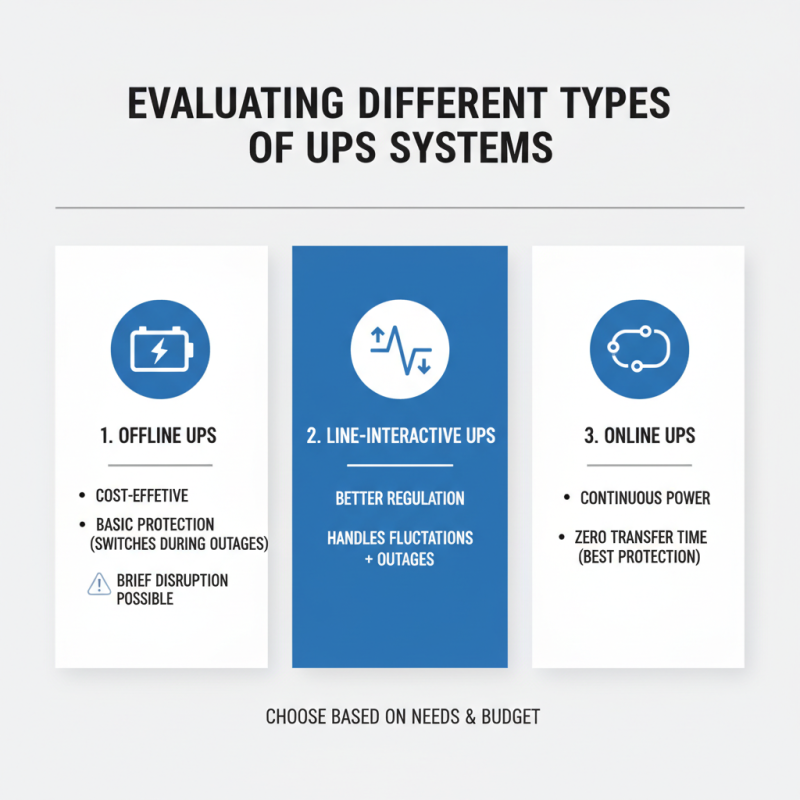
When choosing a UPS system, understanding the types available is crucial. There are three main types: offline, line-interactive, and online UPS systems. Each serves a different purpose. Offline UPS is simple and cost-effective. It switches to battery during outages, but the transition may cause brief disruptions.
Line-interactive UPS provides voltage regulation. It adjusts input voltages before using the battery. This can be beneficial in environments with variable power quality. However, it may not be adequate for sensitive equipment that requires stable power at all times.
Online UPS is the most advanced. It continuously converts power, ensuring a steady supply. This is ideal for data centers and critical equipment, but it can be expensive and may consume more energy. Choosing the right system involves evaluating your power needs and environment. Think about the devices you need to protect and potential uptime.
Considering Runtime and Capacity for Your UPS Needs
When choosing a UPS power supply, runtime and capacity are crucial factors. Runtime determines how long your devices will stay powered during an outage. Industry data indicates that most standard UPS units can provide 5 to 15 minutes of backup power. This duration may seem short, but it’s often sufficient for safely shutting down systems.
Capacity defines the maximum load a UPS can support. It's measured in volt-amperes (VA). A common recommendation is to use a UPS with at least 25% more capacity than your equipment requires. For example, if your devices draw 600 VA, consider a unit rated for at least 750 VA. This extra headroom helps handle extra loads and ensures stable performance.
Many users overlook runtime requirements. It’s important to assess how critical the devices are during power outages. Some remote monitoring systems might need longer backup times. A report from the Power Protection Society noted that about 30% of enterprises miscalculate their runtime needs, leading to potential data loss or operational delays. Regularly evaluate these factors as your technology evolves.
How to Choose the Right UPS Power Supply for Your Needs? - Considering Runtime and Capacity for Your UPS Needs
| UPS Model |
Power Capacity (VA) |
Runtime (min) |
Number of Outlets |
Form Factor |
| Model A |
1500 VA |
30 min |
6 |
Tower |
| Model B |
2000 VA |
45 min |
8 |
Rack |
| Model C |
1000 VA |
20 min |
4 |
Desktop |
| Model D |
3000 VA |
60 min |
10 |
Tower |
Assessing Budget and Brand Reliability in UPS Choices
Choosing the right uninterruptible power supply (UPS) involves careful consideration of your budget and brand reliability. According to a recent industry report, nearly 70% of businesses emphasized the significance of brand reputation when selecting a UPS. A reliable brand can ensure quality, longevity, and better service support, which become critical during power outages.
Your budget shapes the UPS selection. A cheaper model might save money upfront, but it could lead to higher replacement costs. Data indicates that organizations investing in dependable UPS systems save up to 30% in overall maintenance costs over five years. However, not every high-priced brand guarantees superior performance. It’s vital to weigh features against cost to find that balance.
Purchasing decisions should consider warranty offers and customer reviews. Many consumers overlook these aspects, leading to regrets post-purchase. Even with a trusted brand, issues can arise. 30% of users reported dissatisfaction due to inadequate support. Thorough research is necessary to avoid being trapped in a cycle of poor performance and wasted funds.
Comparison of UPS Power Supply Capacities by Price Range

 Products
 News
News
 Whatsapp
 Skype
Skype
 Wechat