How to Choose the Right Dc Power Supply for Your Electronics Projects?
Choosing the right DC Power Supply is crucial for successful electronics projects. A quality supply ensures stable voltage and prevents damage to sensitive components. According to a report by MarketsandMarkets, the global DC power supply market is expected to reach $4 billion by 2025, highlighting the growing need for reliable power solutions.
Expert in power systems, Dr. Emily Carter, emphasizes, "A well-chosen DC power supply can enhance device performance and longevity." This sentiment resonates strongly in the electronics community. Many hobbyists and professionals overlook key specifications like voltage range, current rating, and efficiency. Each choice can significantly impact project outcomes.
Not all products perform equally. Some brands may promise reliability but fall short in real-world applications. Selecting a DC Power Supply requires careful consideration of features and potential shortcomings. A thoughtful approach can lead to breakthroughs in your projects. Balancing quality and cost often proves challenging. Researching industry standards is essential to avoid common pitfalls.
Understanding the Basics of DC Power Supply Types and Specifications
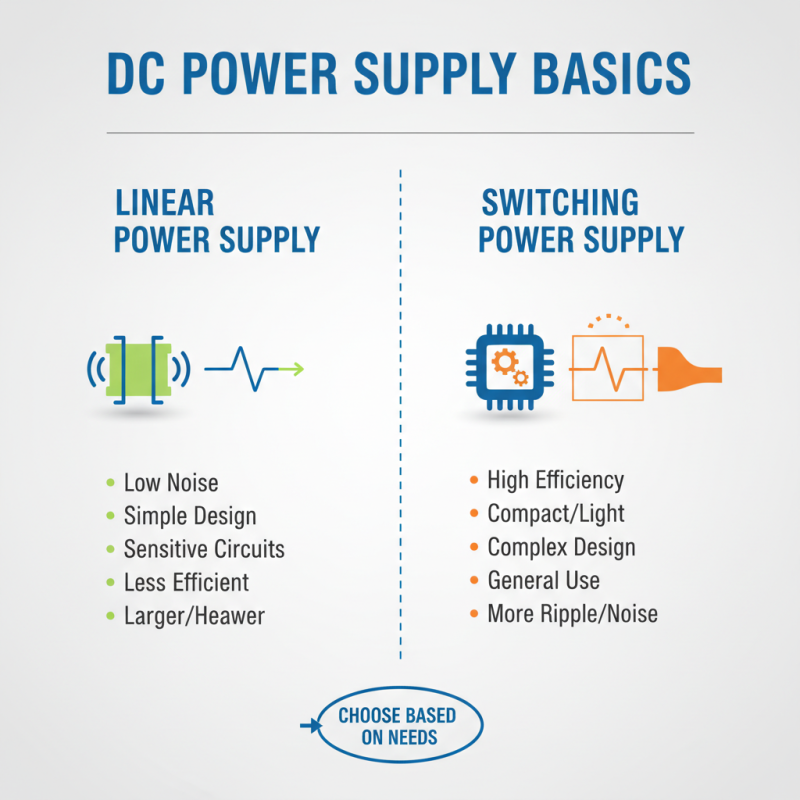
When choosing a DC power supply, understanding its types and specifications is crucial. There are two main types: linear and switching power supplies. Linear supplies offer low noise and simplicity, ideal for sensitive circuits. Switching supplies, while more complex, provide efficiency and compactness. Both types have their merits, but selecting the right one depends on your specific needs.
Specifications play an important role in the selection process. Voltage and current ratings must match your project's requirements. Incorrect ratings can lead to equipment damage or failure. Look for adjustable voltage settings for flexibility. Additionally, check the output stability. It's important for sensitive electronics, as fluctuations can affect performance.
Don't overlook safety features like short-circuit protection and thermal shutdown. These can prevent accidents during operation. Consider the supply's physical size as well; it should fit comfortably in your project space. While many power supplies look similar, their internal components can vary greatly. Always reflect on your project's demands and test compatibility before finalizing a choice.
Key Factors to Consider When Selecting Voltage and Current Ratings
When selecting a DC power supply for electronics projects, understanding voltage and current ratings is crucial. Voltage defines how much power your circuit can receive. Too high a voltage can damage components, while too low can lead to insufficient operation. Always check the voltage requirements of your project before choosing a power supply.
Current ratings are equally important. They determine how much the power supply can provide. Each component in your circuit requires a specific current level. If the supply can't deliver enough, the circuit will not function properly. It's wise to choose a power supply with a higher current rating than your project needs. This provides a buffer and enhances reliability.
Testing the setup is essential. Sometimes, components behave unpredictably. You might see fluctuations in performance with different voltage and current levels. Adjusting these can lead to better function, but it necessitates careful monitoring. Be prepared for trial and error. Each project is unique, and not every choice will yield immediate success. It’s part of the learning process.
Voltage and Current Ratings for DC Power Supplies
This chart shows the current ratings of various voltage levels for DC power supplies that are commonly used in electronics projects. It is essential to select the right voltage and current rating to ensure that your projects function correctly.
Analyzing Load Requirements for Optimal DC Power Supply Selection
When selecting a DC power supply for your electronics projects, analyzing load requirements is crucial. The load of your project determines the power supply specifications. Each component in a circuit has its own voltage and current demands. Gathering these specifications is a fundamental step.
To begin, consider the total current draw of all components combined. Add a margin of safety to accommodate unexpected spikes. For example, if your components require 2A, opt for a power supply rated slightly above this, such as 3A. This will ensure reliability during operation.
Voltage is equally important. Use a multimeter to measure the voltage requirements of your devices. A mismatch can lead to failure. You may encounter situations where the measured voltage varies from the expected. In such cases, always prioritize a reliable source. Keeping these details in mind helps avoid problems down the line.
Comparing Linear vs. Switching DC Power Supplies for Efficiency
When selecting a DC power supply, efficiency is often a critical consideration. Linear and switching DC power supplies are the two primary types available. Each has its strengths and weaknesses.
Linear power supplies offer excellent voltage regulation and low noise, making them ideal for sensitive applications. However, they tend to be less efficient. According to a report by the International Energy Agency, linear supplies can waste up to 50% of input power as heat, especially in high-output applications.
In contrast, switching power supplies are more efficient. They can achieve efficiency rates exceeding 90%, as reported by the Electrical Engineering Journal. This efficiency comes from their design, which rapidly switches the output on and off. They can also handle a wider range of input voltages. However, switching supplies can introduce electrical noise, which may not be suitable for all electronic projects. Balancing these factors requires careful consideration of your project's specific needs.
Projects with high power requirements may benefit from switching supplies due to their efficiency. Yet, sensitive electronics might need the low-noise operation of linear supplies. Each type presents unique challenges in implementation and usability. Understanding these differences is crucial in making an informed choice.
Evaluating Additional Features: Protections, Adjustability, and Interfaces
When selecting a DC power supply, considering additional features is crucial. Protection features are essential for safeguarding components. Overcurrent protection prevents damage when current exceeds safe levels. Voltage protection ensures the output remains within intended limits. These features help in maintaining the integrity of your electronics, but it's vital to understand their specifications. Some designs might not offer robust protection, leaving your project vulnerable.
Adjustability is another key feature to evaluate. A power supply with adjustable voltage and current allows for greater flexibility in experiments. This can be particularly advantageous when working with diverse electronics. However, some adjustable supplies can be complex to operate. Often, users face challenges in setting the correct parameters. Familiarizing yourself with the controls and options is important to avoid potential errors.
Lastly, consider the interfaces provided by the power supply. A user-friendly interface enhances your experience. Digital displays show real-time data, which makes monitoring easier. However, not all interfaces are intuitive. A complicated layout can lead to confusion and mistakes in settings. Choosing a power supply also requires reflection on these aspects to ensure it aligns with your project needs.
How to Choose the Right DC Power Supply for Your Electronics Projects?
| Feature |
Description |
Importance Level |
| Overcurrent Protection |
Cuts off power output when current exceeds a specified limit. |
High |
| Adjustable Voltage |
Allows users to set the desired output voltage within a specific range. |
Medium |
| Short Circuit Protection |
Prevents damage by shutting down output in case of a short circuit. |
High |
| Digital Display |
Provides real-time voltage and current readings for easier monitoring. |
Medium |
| Remote Control Interface |
Allows control of the power supply from a computer or mobile device. |
Low |

 Products
 News
News
 Whatsapp
 Skype
Skype
 Wechat