How to Choose the Right AC DC Power Supply for Your Needs?
Choosing the right AC DC power supply is crucial for your devices. With the global market for power supplies projected to reach $30 billion by 2024, understanding your needs is essential. Many industries depend on reliable power supplies, yet the selection often feels overwhelming.
Data shows that around 40% of users choose their power supplies based solely on price. However, this approach can lead to inefficiencies. Quality matters, as subpar AC DC power supplies can cause device failure or increased energy costs. It is important to evaluate the compatibility and load requirements of your applications.
Many users overlook the significance of efficiency ratings. Studies indicate that only 30% of power supplies achieve optimal efficiency. This can lead to wasted energy and higher operational costs. Reflecting on these details can guide better decision-making. Selecting the correct AC DC power supply is not just a technical choice; it impacts long-term performance and sustainability.
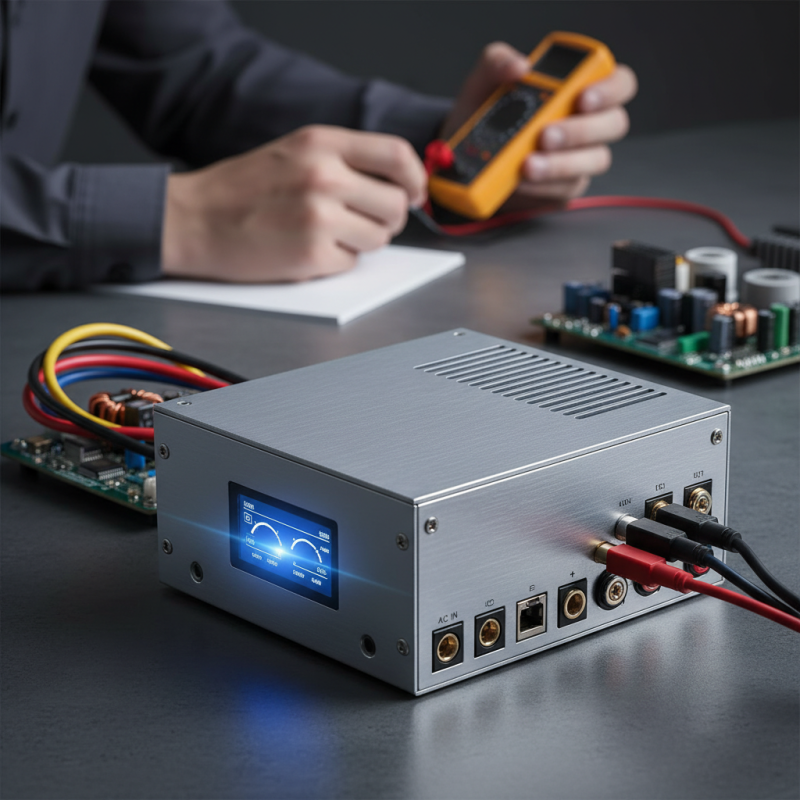
Understanding AC and DC Power Supply Fundamentals
When it comes to power supplies, understanding the basics is crucial. AC (Alternating Current) and DC (Direct Current) are the two primary types of power available. AC power switches direction periodically, making it suitable for home appliances. In contrast, DC power flows in a single direction and is commonly used in batteries and electronic devices. Knowing the differences helps in selecting the right supply for your project.
Choosing the right power supply begins with determining your device's requirements. Check the voltage and current specifications first. Many devices specify either AC or DC. Look for a supply that fits. An AC supply may not work well for DC devices. In some cases, users overlook this detail. The mismatch can cause damage or inefficient performance.
Think about the environment too. Will the power supply be in a dusty area? Consider heat and humidity. These factors affect the longevity and performance. Sometimes, the right power supply is not just about specifications. It's also about reliability and safety. If you’re uncertain, asking for advice is not a sign of weakness; it’s a step toward making an informed decision.
How to Choose the Right AC DC Power Supply for Your Needs? - Understanding AC and DC Power Supply Fundamentals
| Dimension |
AC Power Supply |
DC Power Supply |
Typical Applications |
| Voltage Range |
110V-240V AC |
5V-48V DC |
Household Appliances |
| Power Rating |
100W-2000W |
10W-500W |
Industrial Equipment |
| Efficiency |
80%-95% |
85%-96% |
Renewable Energy Systems |
| Size |
Larger & Bulkier |
Compact & Lightweight |
Consumer Electronics |
| Output Regulation |
Linear Transformation |
Switching Regulation |
Telecommunication Devices |
Identifying Your Power Requirements
When selecting an AC DC power supply, understanding your power requirements is essential. The power supply must meet the voltage and current specifications of your device. For example, devices may require 5V, 12V, or even higher voltages. The current rating should also match; otherwise, performance will suffer. Data from recent industry reports indicates that 60% of power supply failures are due to insufficient current ratings. This means loading your supply too heavily can lead to overheating and malfunction.
Consider peak and average loads. A power supply should handle short bursts of high demand without failing. It is beneficial to have a buffer above the average current draw. Reports suggest a 20% headroom is optimal. It’s easy to underestimate needs, especially in prototyping stages. Do take your time and check specifications rigorously. Failure to do this can waste resources and time, which is often overlooked. Some might choose a simpler, cheaper solution initially but face regret when performance issues arise later. Attention to detail is key in this process.
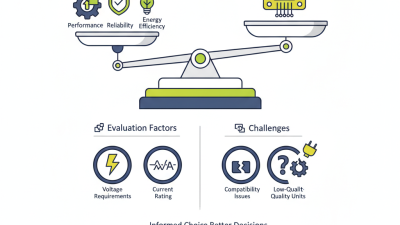
Evaluating Voltage and Current Ratings
When selecting an AC/DC power supply, understanding
voltage and current ratings is crucial.
Voltage must match your device's requirements closely. Too high a voltage can damage the device.
Conversely, too low won’t power it effectively. Researching the device specification sheets can reveal
the necessary voltage. Ensure the chosen supply can handle standard fluctuations.
Current ratings, often overlooked, are equally significant. The power supply must provide enough
current for optimal performance. Insufficient current can lead to underperformance or possible damage.
However, selecting a supply with excessive current capacity isn’t always best. It may cause
inefficiency and increase costs.
Evaluating these ratings means looking beyond numbers. Assess the environmental conditions too.
Heat and humidity can affect performance. Some power supplies may not function correctly under
extreme conditions. Verification through manual testing may be wise. This step can help catch any
mismatches early on, saving time and money later.
Exploring Different Types of Power Supplies
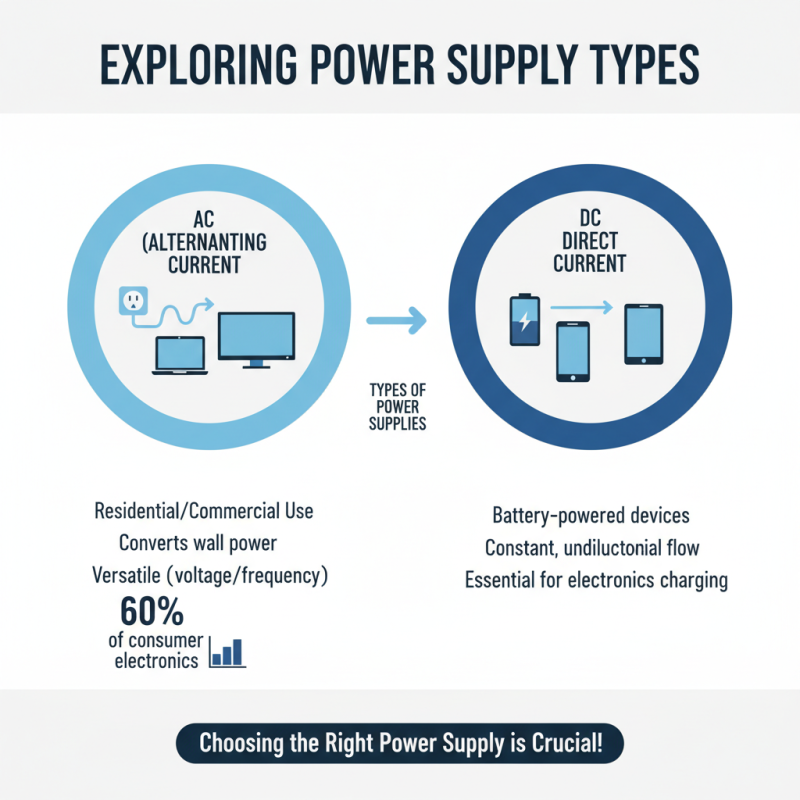
When selecting a power supply, understanding the types available is crucial. Power supplies mainly fall into two categories: AC and DC. AC (Alternating Current) power supplies are often used in residential and commercial settings. They convert the electricity from the wall outlet into usable energy for various devices. According to industry data, around 60% of consumer electronics utilize AC power. It's versatile and can be easily transformed into different voltages and frequencies.
On the other hand, DC (Direct Current) power supplies are essential for battery-operated devices and electronic circuits. They provide a steady flow of electricity. A report by the Power Supply Manufacturers Association (PSMA) indicates that the DC power supply market is projected to grow by 5.6% annually, highlighting its crucial role in modern technology. For example, solar panels generate DC power, which is increasingly vital as renewable energy becomes mainstream.
Yet, selecting the right type can be challenging. Each supply has its advantages and limitations. Sometimes, a mismatch can lead to inefficiencies or equipment failure. Users must assess their specific needs carefully. A power supply should not only fit the device but also optimize performance. Ensure you research and reflect on your requirements to make an informed choice.
Assessing Efficiency and Safety Features
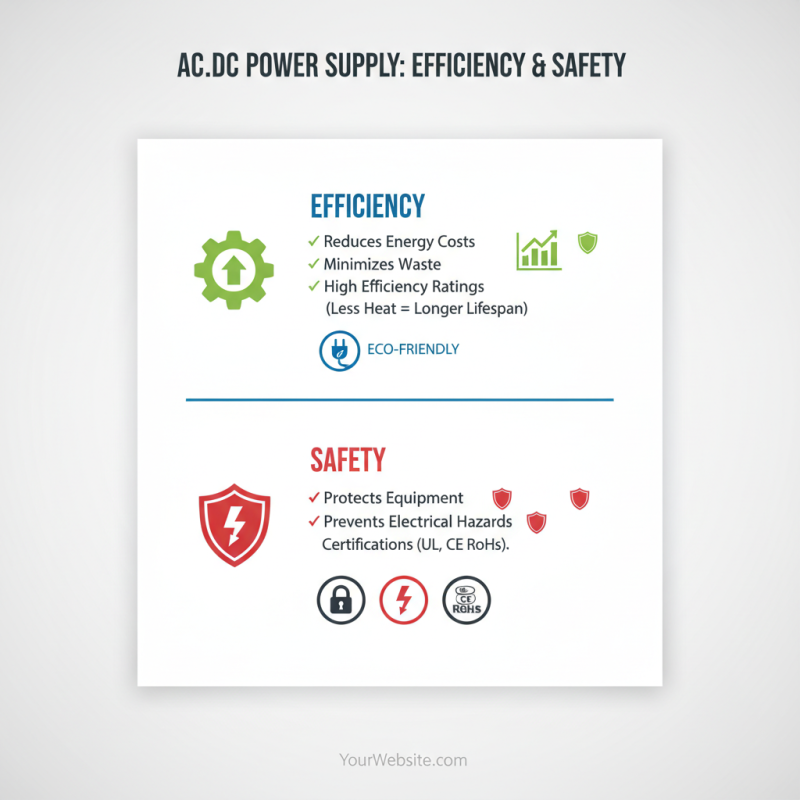
Choosing the right AC DC power supply requires careful consideration of efficiency and safety features. Efficiency is essential for reducing energy costs and minimizing waste. Look for models boasting high efficiency ratings. These ratings indicate how effectively the power supply converts electrical energy. An efficient unit generates less heat, which prolongs its lifespan.
Safety features are equally important. Over-voltage protection prevents potential damage to your devices. Short-circuit protection can save both the power supply and the connected equipment from failure. Moreover, consider thermal protection features; they shut down the supply if it overheats. Safety must not be an afterthought; any negligence can lead to serious problems.
Visually inspecting the unit's design can reveal a lot. Good build quality often translates to reliability. However, even well-built models may have unseen flaws. Researching safety certifications is crucial. Certifications ensure that a product meets established safety standards. Sometimes, the most affordable option is not the safest. The choice can be challenging. Balancing cost, efficiency, and safety requires reflection and diligence.

 Products
 News
News
 Whatsapp
 Skype
Skype
 Wechat