How to Choose the Right Power Supply for Your Electronics?
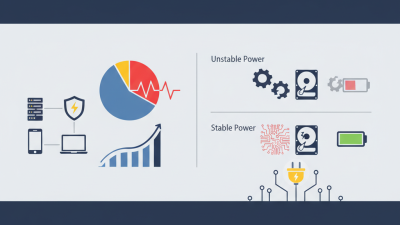
Choosing the right power supply is crucial for any electronic device. A well-chosen power supply ensures efficiency and longevity. According to industry reports, around 30% of electronic device failures are due to inadequate power supplies. Many designers overlook this aspect, leading to costly issues down the line.
In today's market, power supply specifications vary widely. A power supply typically needs to meet voltage and current requirements precisely. For instance, sourcing suppliers with the right ISO and CE certifications can enhance safety and reliability. However, identifying these suppliers is often a challenge. With the introduction of AI in trade shows like the Canton Fair, buyers can now sift through numerous options more efficiently.
Mismatched power supplies can lead to performance inefficiencies. In fact, a poorly matched power supply can waste up to 20% of energy. It’s not just about performance; it also impacts device lifespan. Therefore, understanding specifications and using advanced tools for supplier selection are becoming crucial in the electronics industry. This ongoing evolution highlights the need for ongoing education and reflection in power supply decision-making.

Understanding Power Supply Basics for Electronics
Understanding power supply basics is crucial for any electronics project. A power supply provides the necessary electrical energy to devices. The type of power supply determines device performance, lifespan, and efficiency. According to industry reports, approximately 30% of electronics failures stem from inadequate power supply choices. This highlights how essential it is to grasp power supply fundamentals.
Voltage requirements are foundational. If a device operates primarily at 5V and receives 12V, it may fail. A reliable supply ensures consistent voltage. Additionally, current ratings must match device demands. Devices may draw more current at startup. This peak demand can lead to overloading if a supply is improperly rated. As a result, understanding specifications like wattage and ripple voltage is key.
Efficiency is another significant factor. Many supplies operate at just 70-80% efficiency. This inefficiency can lead to wasted power and increased heat. Designers must contemplate these inefficiencies when choosing supplies. There’s also a constant tension between cost and quality. Cheaper supplies can tempt buyers, but they often compromise safety and reliability. It's vital to balance these considerations for optimal device performance.
How to Choose the Right Power Supply for Your Electronics?
| Parameter |
Description |
Value/Range |
| Voltage Output |
The output voltage the power supply provides to the load. |
5V, 12V, 24V, etc. |
| Current Rating |
The maximum current the power supply can provide safely. |
1A to 10A or higher |
| Power Rating |
The total power output, calculated as Voltage x Current. |
10W to 500W |
| Efficiency |
The ratio of output power to input power, expressed as a percentage. |
80% to 95% |
| Form Factor |
The physical size and shape of the power supply. |
ATX, SFX, open-frame |
| Protection Features |
Built-in safeguards to prevent damage from overvoltage, overcurrent, etc. |
OVP, OCP, SCP |
| Cooling Mechanism |
Method used to dissipate heat generated by the power supply. |
Passive, active fan |
| Certification Standards |
Compliance with safety and efficiency standards. |
UL, CE, FCC |
Identifying Your Power Requirements: Voltage and Current Needs
When choosing a power supply, understanding your voltage and current needs is essential. Start by identifying the voltage requirements of your devices. Most electronics specify a required voltage. Check the labels or the user manual. It's crucial to match this voltage.
Next, consider the current needs. Current is measured in amperes (amps). Each device consumes a certain amount of current. If unsure, use a multimeter to measure how much your device needs. This ensures you choose a power supply that meets these requirements.
Tips: Always add a little buffer to your current needs. It helps prevent any potential overloads. For example, if a device needs 2A, consider a power supply rated for 2.5A. Also, avoid using power supplies that provide a higher voltage than required. This can damage your electronics.
Another consideration is efficiency. Not all power supplies are made equal. Look for ones with good ratings to ensure longevity and reliability. Poor quality supplies can lead to overheating or failure. Take your time when researching options. Sometimes, it’s better to spend a bit more for stability. Your devices will appreciate it.
Evaluating Different Types of Power Supplies: Linear vs. Switching
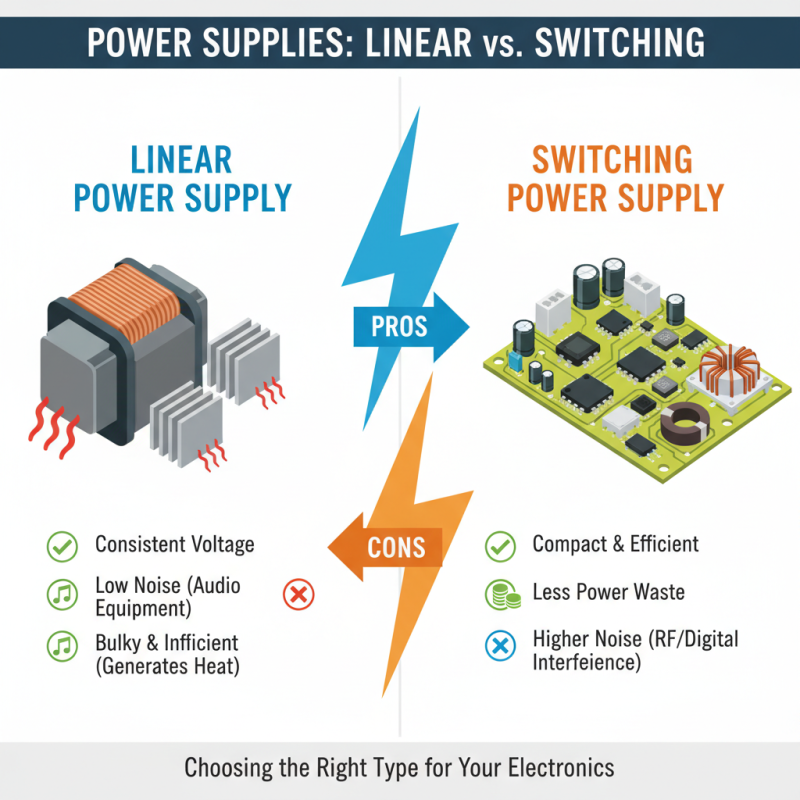
When considering power supplies for electronics, it's crucial to evaluate the differences between linear and switching types. Linear power supplies provide consistent voltage levels. They are known for their simplicity and low noise output. This is especially important in sensitive applications like audio equipment. However, they can be bulky and inefficient, wasting power as heat.
Switching power supplies, on the other hand, are more compact and efficient. They convert electrical energy using a rapid switch. This design results in less energy loss and a lighter device. However, switching supplies may introduce noise into the system. This noise can affect circuits sensitive to interference.
Tips: Always consider your project’s specific needs. Evaluate the voltage range, current demands, and space constraints. You might find that a switching supply works well for most applications, but some projects might benefit from the clean output of a linear supply. Do some tests to gauge performance. Remember, not every solution is perfect. Ignoring potential noise issues could lead to unforeseen problems. It's essential to reflect on your choices and their impacts.
Key Specifications to Consider When Choosing a Power Supply
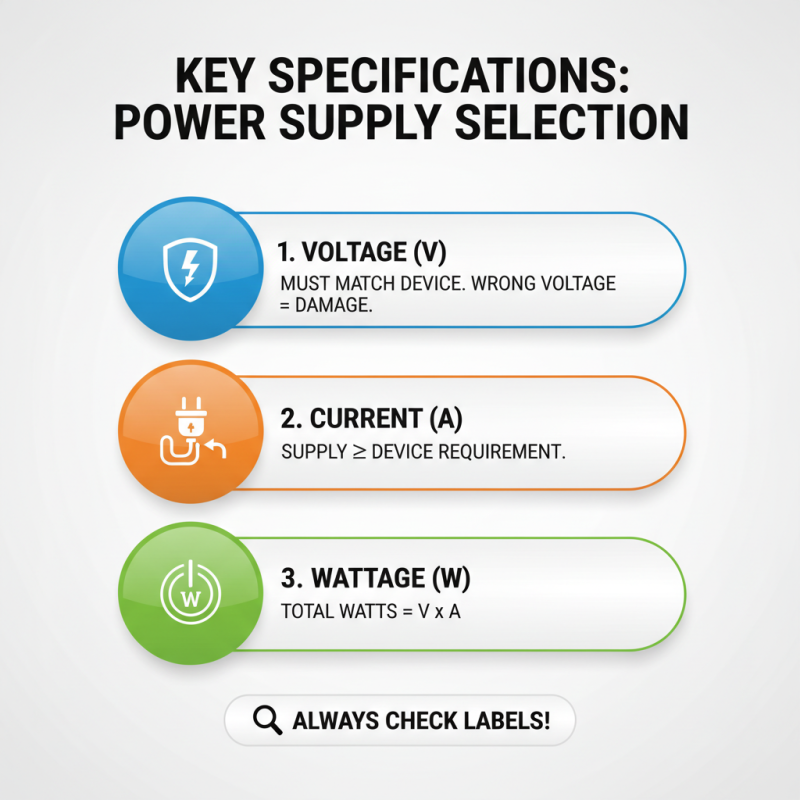
Choosing the right power supply is crucial for your electronics. Start with voltage. Make sure it matches your device’s requirements. Using a power supply with too high or too low voltage can damage components. Check the labels. Often, these details are printed clearly.
Next, consider the current rating. This is measured in amperes. Your device needs a specific amount of current. If you provide too little, it may not work properly. Too much can lead to overheating. Look for the recommended amperage in your device's manual.
Efficiency is another key factor. An inefficient power supply wastes energy and generates heat. This can shorten the lifespan of your device. Aim for a power supply with a good efficiency rating. Sometimes, you might overlook this aspect, thinking all power supplies are similar. Take time to compare options. It’s worthwhile for the longevity of your electronics.
Ensuring Compatibility with Your Electronics and Safety Standards
When selecting a power supply, compatibility is essential. Check the voltage needs of your device. A mismatch can lead to damage. Many electronics operate on standard voltages. However, some may require specific settings. Read the specifications carefully before making a purchase.
Safety standards are critical as well. A power supply should have proper certifications. Look for labels indicating compliance with safety guidelines. Using a non-compliant power supply can pose serious risks. This can include overheating or electrical shock. It’s crucial to invest time in understanding these standards.
Sometimes, users overlook small details. Think about the connectors. Ensure they fit your electronics properly. A loose connection can cause issues over time. Additionally, consider the wattage. Too little can strain your device. Too much may waste energy. Reflect on your needs before settling on a choice.
Power Supply Wattage Requirements for Common Electronics

 Products
 News
News
 Whatsapp
 Skype
Skype
 Wechat