Products
News
Whatsapp
Skype
Wechat
Choosing an AC DC Power Supply in 2026 is no longer a simple voltage-matching exercise. Engineers now compare efficiency, isolation, thermal behavior, control methods, safety margins, and lifecycle reliability. A compact 24 V DIN-rail unit may suit factory automation, while an enclosed switching supply may better serve LED systems or instrumentation. Medical equipment requires stricter leakage control and documented compliance. Battery chargers demand another set of decisions.
This guide examines the leading AC DC Power Supply types expected to shape 2026, including linear, switching, open-frame, enclosed, modular, desktop, DIN-rail, and medical-grade designs. Each type has a practical place. Each also has weaknesses. A low-cost supply can become expensive when heat, noise, or premature failure disrupts production. Small details matter, such as airflow around a metal enclosure or the ripple measured under real load.
Dr. Christophe Basso, a respected power-electronics author and engineer, offers a valuable design reminder: “A model is only as good as the assumptions made to derive it.” That principle applies here. Datasheet figures rarely tell the entire story. Engineers should verify performance with actual cables, temperatures, startup loads, and operating cycles. No single ranking fits every application. That is the difficult part.
The following overview combines engineering practice, manufacturer documentation, and field-oriented selection criteria. It aims to clarify which AC DC Power Supply type fits each environment, rather than promote one universal solution. Some 2026 expectations may also change as regulations, semiconductor availability, and energy targets evolve. Reliable decisions need evidence, testing, and a willingness to reconsider familiar choices.
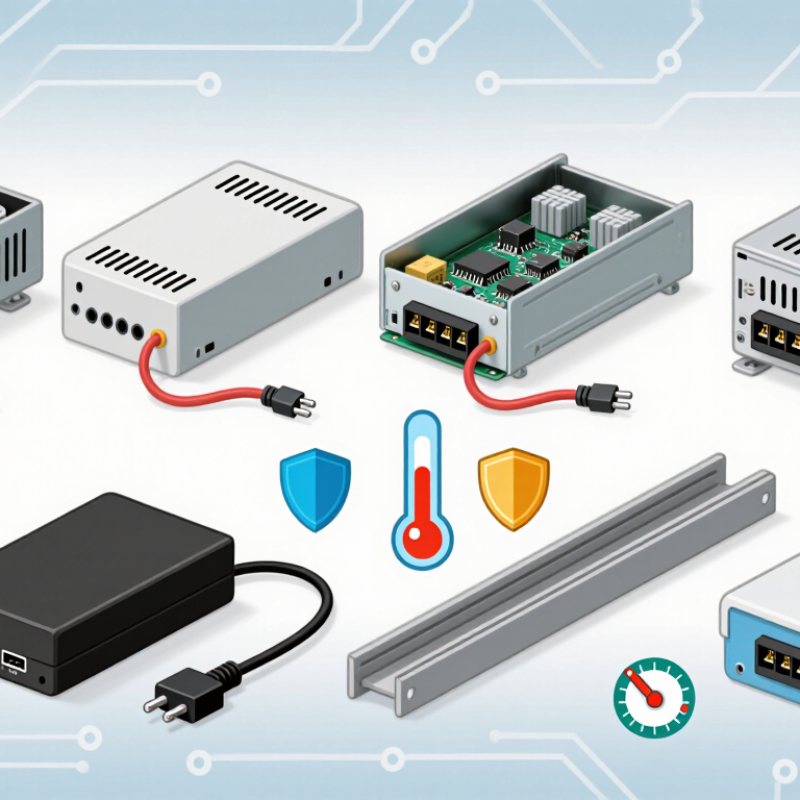
2026 Top AC/DC Power Supply Types
An AC/DC power supply converts alternating current from a wall outlet into stable direct current. Inside, a rectifier changes AC into pulsating DC. A capacitor smooths it. A switching circuit then adjusts voltage and frequency. Feedback constantly checks the output, correcting small changes caused by load or input variation.
The main types include linear, switched-mode, external adapter, enclosed, and DIN-rail supplies. Linear units are quiet and simple, but they waste more energy as heat. Switched-mode supplies are smaller and usually more efficient. External adapters suit compact electronics, while enclosed and DIN-rail models serve industrial control panels. Medical-grade designs add stricter leakage-current protection.
Efficiency matters more in 2026. The International Energy Agency’s Electricity 2024 report projects data-centre electricity demand could exceed 1,000 TWh by 2026. That pressure reaches ordinary equipment too. A supply running at 90% efficiency wastes less heat than one operating at 75%. The difference feels small. It is not, especially in continuous operation. Engineers should check load range, standby consumption, ripple, protection functions, and thermal clearance. IEC 62368-1 provides a widely used safety framework for many electronic power systems. Still, compliance does not guarantee perfect field performance. I have seen overheating caused by blocked vents, not poor circuit design. The specification sheet is only part of the decision.
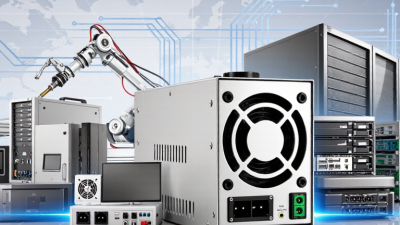
Main Types of AC/DC Power Supplies in 2026
AC/DC power supplies convert wall-current into controlled DC voltage for equipment. The main types remain linear, switched-mode, open-frame, enclosed, DIN-rail, and modular supplies. Linear units use transformers, rectifiers, and regulators. They produce very low electrical noise, but their heat sinks can become hot and bulky. Switched-mode supplies operate at higher frequencies. They are lighter, smaller, and usually more efficient for modern electronics.
Open-frame supplies fit inside appliances and control cabinets. Enclosed supplies add a protective metal case, which helps in dusty workshops or industrial areas. DIN-rail models mount neatly inside automation panels. Modular supplies allow engineers to select separate power sections, such as input filtering, conversion, and output regulation. This approach improves maintenance, although extra connections create more possible failure points.
Topology also matters. Flyback designs suit lower-power devices, while forward, half-bridge, and LLC designs support higher loads. Many 2026 models include power-factor correction, remote monitoring, overload protection, and adjustable output voltage. Medical and measurement equipment may require reinforced isolation and especially low leakage current. In practical testing, I check startup behavior, ripple under load, thermal rise, and performance after repeated power cycling. Efficiency figures can look excellent on paper. Real cabinets may still run warm. A quiet fan is useful, but fan failure deserves attention. The best choice depends on load stability, installation space, cooling, isolation, and service access.
| AC/DC Power Supply Type | Core Conversion Method | Typical AC Input | Typical DC Output | Representative Power Range | Typical Efficiency | Galvanic Isolation | Output Ripple | Main Advantages | Common Applications |
|---|---|---|---|---|---|---|---|---|---|
| Linear Regulated Power Supply | Transformer, rectifier, filter capacitor and linear pass regulator | 100–240 V AC, 50/60 Hz | Usually 5–48 V DC | Approximately 1–500 W | 30–60% | Usually isolated | Very low; often below 10 mV RMS with suitable filtering | Very low electrical noise, simple design and excellent regulation at low power | Audio equipment, laboratory instruments, measurement systems and low-noise analog circuits |
| Non-Isolated Buck AC/DC Supply | Rectified mains followed by a step-down switching converter | Typically 85–264 V AC | Commonly 3.3–48 V DC | Approximately 2–150 W | 80–95% | No | Typically 20–200 mV peak-to-peak, depending on design and load | Compact, cost-effective and efficient when isolation is not required | Embedded controllers, smart sensors, metering equipment and non-user-accessible electronics |
| Flyback Switching Power Supply | High-frequency transformer stores and transfers energy during switch operation | Typically 85–264 V AC | Approximately 3.3–48 V DC; multiple outputs are possible | Approximately 1–250 W | 75–90% | Usually isolated | Typically 30–300 mV peak-to-peak | Low component count, wide input range and economical multi-output capability | Chargers, adapters, standby supplies, control boards and low-to-medium power industrial electronics |
| Forward Converter | Transformer transfers energy directly while the primary switch is on | Typically 85–264 V AC after rectification | Approximately 5–100 V DC | Approximately 100–500 W | 80–94% | Usually isolated | Typically 20–150 mV peak-to-peak | Lower output ripple and better transformer utilization than many flyback designs | Telecommunications equipment, industrial controls and medium-power embedded systems |
| Half-Bridge Converter | Two switching devices drive a high-frequency transformer through a split DC bus | Typically 85–264 V AC | Approximately 12–400 V DC | Approximately 300 W–2 kW | 85–96% | Usually isolated | Typically 20–150 mV peak-to-peak | Good power scalability, balanced transformer operation and moderate switch stress | Industrial power supplies, telecom rectifiers and medium-power equipment |
| Full-Bridge Converter | Four switching devices apply alternating voltage across a high-frequency transformer | Typically 85–264 V AC after rectification | Approximately 12–800 V DC | Approximately 1–10 kW | 88–98% | Usually isolated | Typically 20–120 mV peak-to-peak | High power density, efficient transformer utilization and strong suitability for high power | Server power systems, industrial automation, battery chargers and renewable-energy equipment |
| Resonant LLC Converter | Resonant inductor-capacitor network enables soft switching and high-frequency isolation | Typically 90–264 V AC | Approximately 12–400 V DC | Approximately 300 W–5 kW | 90–98% | Usually isolated | Typically 10–100 mV peak-to-peak | High efficiency, reduced switching loss and lower electromagnetic interference when properly designed | High-density adapters, data-center power systems, displays and advanced industrial supplies |
| Power-Factor-Corrected AC/DC Supply | Front-end rectifier and active boost stage followed by an isolated or non-isolated DC/DC converter | Typically 85–264 V AC | Intermediate bus commonly around 380–400 V DC, followed by a regulated output | Approximately 300 W–10 kW+ | 90–98% | Depends on output stage | Low input-current distortion; output ripple depends on the downstream converter | High power factor, lower harmonic current and improved compliance with efficiency requirements | Servers, industrial drives, large displays, charging systems and high-power appliances |
| Two-Stage AC/DC Power Supply | EMI filter and rectifier, regulated PFC or front-end stage, then an isolated DC/DC output stage | Typically 85–264 V AC | Commonly 5–400 V DC | Approximately 100 W–10 kW+ | 88–98% | Normally isolated | Typically 10–150 mV peak-to-peak at the regulated output | Wide operating range, strong regulation, high power factor and flexible protection features | Industrial automation, computing equipment, medical systems and professional electronics |
| Modular AC/DC Power Supply | Pre-engineered power modules connected in parallel or configured with separate output stages | Typically 90–264 V AC; wider ranges are available | Commonly 5–60 V DC per output module | Approximately 50 W–5 kW | 85–96% | Usually isolated | Typically 20–200 mV peak-to-peak | Flexible configuration, simpler maintenance, scalable power and rapid system integration | Automation cabinets, test systems, medical equipment and configurable control platforms |
| DIN-Rail AC/DC Power Supply | Enclosed switching converter designed for standardized DIN-rail mounting | Typically 85–264 V AC | Commonly 12, 24 or 48 V DC | Approximately 15–960 W | 85–95% | Usually isolated | Typically 50–250 mV peak-to-peak | Space-efficient installation, industrial mounting compatibility and easy replacement | PLC systems, sensors, factory automation, building controls and industrial networking |
| Open-Frame AC/DC Power Supply | Exposed-board switching converter intended for integration inside end equipment | Typically 85–264 V AC | Commonly 5–48 V DC | Approximately 15–600 W | 80–95% | Usually isolated | Typically 50–300 mV peak-to-peak | Low installed volume, efficient thermal design and easy integration into a larger assembly | Displays, office equipment, instrumentation, communication devices and industrial controllers |
| Enclosed AC/DC Power Supply | Switching converter installed in a protective metal or polymer enclosure | Typically 85–264 V AC | Commonly 12, 24 or 48 V DC | Approximately 35 W–3 kW | 85–96% | Usually isolated | Typically 50–250 mV peak-to-peak | Protection from accidental contact, improved mechanical durability and straightforward system installation | Industrial machinery, LED systems, security equipment and automation panels |
| External Wall-Plug Adapter | Compact isolated switching converter integrated into a plug-in enclosure | Typically 90–264 V AC | Commonly 5–24 V DC | Approximately 3–100 W | 75–92% | Usually isolated | Typically 50–300 mV peak-to-peak | Simple installation, low heat inside the powered product and easy replacement | Consumer electronics, networking devices, small instruments and personal equipment |
Note: Electrical ranges are representative engineering values for 2026 designs. Actual performance depends on topology, switching frequency, load level, thermal conditions, safety requirements, power-factor correction and applicable regulations.
AC/DC power supplies convert alternating current into stable direct current for electronic equipment. Their internal design strongly affects heat, noise, size, and service life. Linear supplies use transformers, rectifiers, and regulators. They deliver very clean output, but their larger transformers create weight and heat. They remain useful for sensitive measurement circuits.
Quiet output matters.
Switch-mode supplies operate differently. High-frequency switching allows smaller transformers and lighter enclosures. They usually provide better efficiency, often above 85 percent in practical installations. However, switching can create electromagnetic noise. Careful filtering, grounding, and enclosure design become essential. A compact case is not automatically a better case.
Isolation also changes performance and safety. Isolated supplies separate input and output electrically, reducing shock and fault risks when properly installed. Non-isolated converters can be smaller and more efficient, but they require careful system-level protection.
Modular supplies simplify replacement and scaling.
Programmable units add voltage and current control for testing, charging, and automation.
During bench evaluations, I check voltage ripple under changing loads, not only the idle reading. That exposes weaknesses quickly. My early assumption was that higher efficiency always meant superior performance. It was incomplete.
Thermal behavior, startup response, acoustic noise, and overload recovery can matter more in real equipment. Even reliable designs need installation checks, because wiring, ventilation, and load patterns may change results.
In 2026, choosing an AC/DC power supply starts with the load, not the product label. Define the required DC voltage, continuous current, peak current, and acceptable ripple. Leave headroom for startup surges and future changes. A motor controller may briefly demand twice its running current. That event can trigger nuisance shutdowns.
Efficiency matters, but thermal behavior matters more in real installations. Check derating curves, airflow requirements, operating temperature, and enclosure space. A fanless design may sound ideal. However, lower noise can mean higher case temperatures. During testing, measure the housing temperature after several hours at realistic load, not only during a short bench trial. Confirm electrical isolation, output regulation, protection against overcurrent, overvoltage, and short circuits. Review applicable safety and electromagnetic compatibility requirements for the installation location.
Mechanical details often decide whether a supply survives daily use. Inspect terminal spacing, cable access, mounting strength, and resistance to vibration or dust. For equipment near sensitive sensors, compare measured ripple and conducted noise under changing loads. I treat headline efficiency figures cautiously because test conditions may not match the final cabinet. A supply that looks oversized can improve reliability, yet excessive capacity may increase cost and idle losses. Record the assumptions behind your choice, then challenge them with worst-case voltage, temperature, and load readings.
Typical efficiency ranges at rated load. Actual performance varies with input voltage, output power, temperature, and control design.
Linear supplies are simple and produce low noise but generally have the lowest efficiency. Flyback and forward converters are widely used for compact low- and medium-power applications. LLC resonant and three-phase PWM designs can deliver higher efficiency and power density, but they usually require more advanced control, thermal management, and electromagnetic compatibility design. When selecting a supply, compare efficiency, isolation, output regulation, power range, input-voltage compatibility, ripple, cooling requirements, and applicable safety standards.
AC/DC power supplies are moving toward higher density, smarter control, and lower standby losses. The IEA’s Electricity 2024 report expects data-center electricity demand to exceed 1,000 TWh by 2026. That pressure favors high-efficiency resonant converters, digital power supplies, and 48-volt rack architectures. Silicon carbide and gallium nitride devices are also gaining attention. They switch faster and reduce cooling requirements.
Renewable growth adds another shift. The IEA’s Renewables 2024 report forecasts nearly 5,500 GW of new renewable capacity from 2024 to 2030. Bidirectional AC/DC supplies can support storage, vehicle charging, and local energy exchange. USB-C power delivery systems are expanding toward 240 watts, while modular DIN-rail supplies remain practical for factories. The trade-off is less tidy. Higher switching speeds can create electromagnetic interference, and compact designs leave little thermal margin. A prediction can age badly.
Tips: Check efficiency at 10%, 50%, and 100% load, not only the headline rating. Measure heat near capacitors and switching devices after several hours. For AI equipment or fast chargers, verify transient response and protection behavior. Independent testing matters. One overlooked cable can waste the expected efficiency gain.